




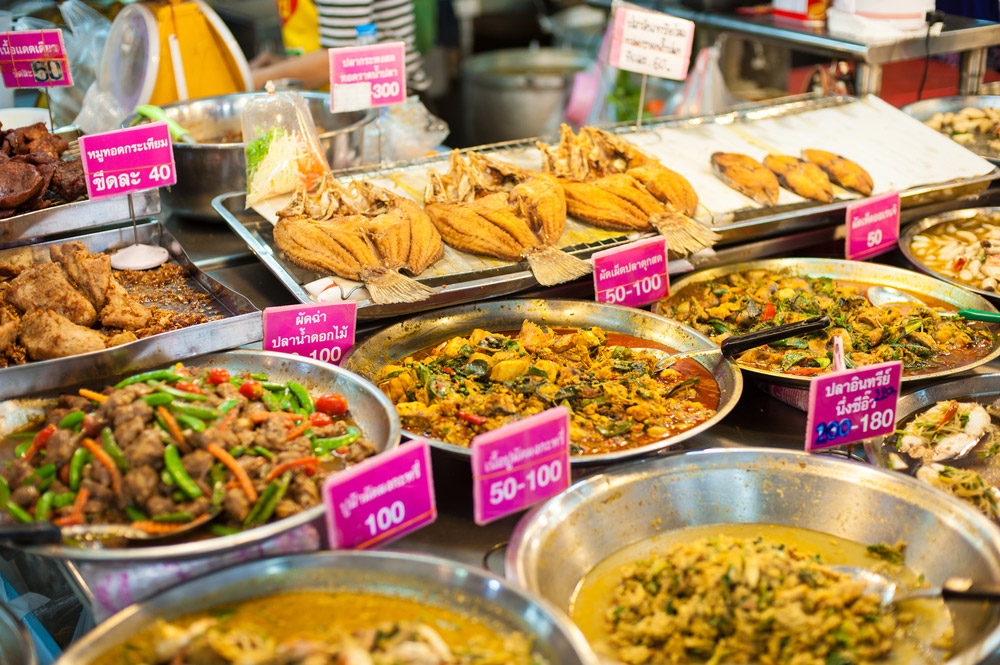
Street food is snacks sold at stalls that can be found on the streets and squares in many cities.
The world's street food capital – Bangkok
The sheer variety of Thai cuisine is mind-blowing 😉 Khao San Road, likewise, boasts numerous carts selling aromatic food. Although you can find them early in the morning, it's best to visit in the evening, when the stalls are truly packed. The colorful neon signs lining the streets and the unique atmosphere add to their charm, attracting tourists from all over the world.
What is Thai street food like?
Filling, aromatic, and unique. Just like Thai cuisine. You're probably already familiar with the most popular Thai dish – yes, it's Pad Thai! Street stalls offering both traditional and slightly modernized versions are everywhere, both because of this dish's immense popularity and its speed of preparation. The main ingredient is, of course, noodles, which are stir-fried with chicken or shrimp and vegetables. Another very popular dish sold at street stalls is Mango Sticky Rice, glutinous rice with coconut milk and mango. What's its secret? A special rice that becomes very sticky when cooked, combined with ripe mango, creates a perfect dessert that you'll dream about long after your return from Thailand.
And to wash it down – coconut water! Perfect for the Thai heat, it's pleasantly refreshing and cooling. You can usually buy green coconuts at market stalls, which the seller opens on the spot. Add a straw and you're ready to drink.
Bangkok's most iconic street food destination is undoubtedly Khao San Road, where you can experience a true taste of exotic Asia. It's cheap, which unfortunately sometimes leads vendors to substitute ingredients for cheaper alternatives. This market also boasts a wide selection of stalls offering edible insects, including larvae, grasshoppers, and deep-fried scorpions.

A stall with a star!
Did you know that one of Bangkok's stalls, "Raan Jay Fai," has been awarded a Michelin star? It's owned by 73-year-old Jay Fai, a master Thai chef and crab omelet specialist. Due to the high demand for her cuisine, rising costs, and tourists who weren't buying food but were just taking photos, she even asked for the star to be revoked.
Fruit, dumplings, horses... street food in China
On the streets of China, you can buy dim sum or various noodles from early morning, with significantly more food stalls appearing in the evenings. Street food is especially popular in tourist areas. These are mainly deep-fried or grilled dishes. The ingredients vary depending on the region where you sample them. One of the most popular dishes is dim sum, dumplings made of delicate dough. They are steamed and filled with a variety of fillings, from meat to delicate fish and vegetables. Another example is candied fruit, or Bingtang Hulu, a delicious fruit snack from the northern part of the country, featuring pineapples, bananas, and strawberries coated in sugar. And for more adventurous tourists, we recommend the crunchy and protein-packed... grasshoppers.
Eating in a designated place, or Japanese street food
Japanese street food is a bit more challenging 😉 Due to the crowds, litter, and lack of trash bins, eating on the street is not particularly frowned upon. Although street food isn't as popular in Japan as Thai food, it can be found in places frequently visited by tourists. With street food stalls, you have to eat on the spot and leave your trash there. Yatai, as these stalls are called, appear on the streets in the evenings. You can eat and drink at them. Things are a bit different during Matsuri celebrations – then you can eat sitting on the sidewalk 😉 What dishes can you find at Japanese stalls? Primarily sweet rice cakes, okonomiyaki pancakes, and yakitori skewers. During Matsuri, you can also find omelets and seafood on a stick. Those with a sweet tooth can enjoy chocolate-covered bananas and various matcha desserts.

Finally, a few rules worth remembering 😉
Above all, be careful with unboiled water! It's the cause of most water poisoning. Avoid drinks with ice cubes or drinking water directly from the tap.
If you enjoy authentic cuisine, remember to always eat where the locals eat. Long lines are often a sign of good quality, while empty restaurants should raise concerns among tourists.
It's also worth checking the conditions in which the products used in your dishes are stored. And it's not just about insects, but storing yogurt outside the refrigerator during hot weather can be risky.
Make sure your dish is freshly prepared. Many stands prepare dishes in advance and then sell them later in the day. Not only can some ingredients spoil on a hot day, but they can also be a target for various insects.