

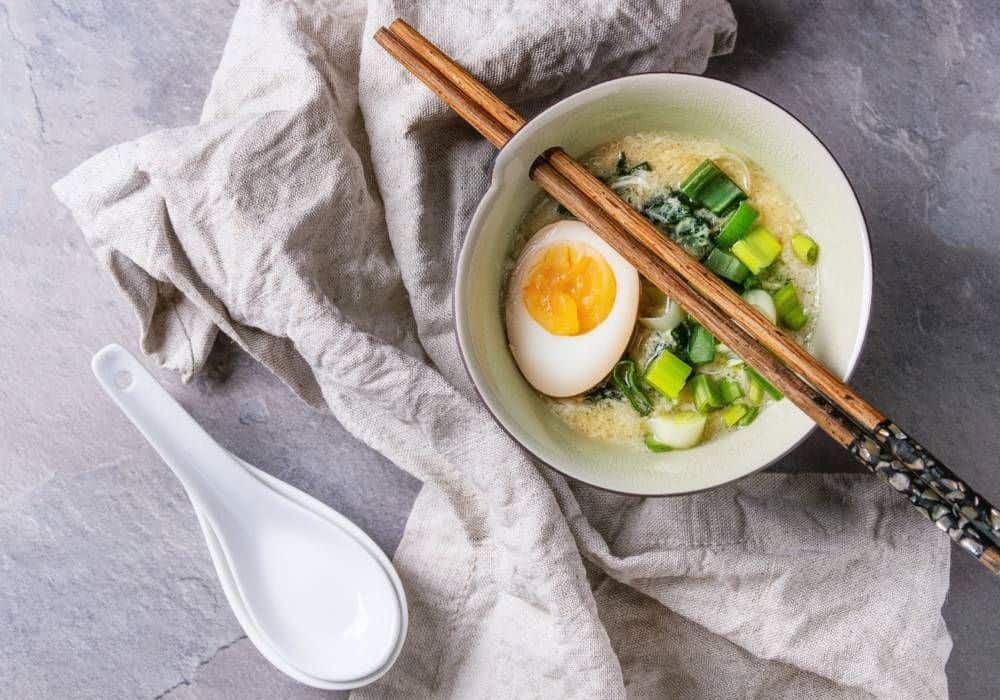
Of course, eggs are used in Asian cuisine in many ways we're already accustomed to. In Chinese cuisine, they're an important ingredient in fried noodles or rice, which we enjoy. In Japanese cuisine, a semi-hard-boiled egg is served as a side dish. miso soup or ramen. Thais like to add a boiled egg to laksa soups or to spicy wok dishes and classic pad Thai. Koreans add a fried egg to their favorite bibimbap, the local version of 'rice with everything'.
We accept all these ways of using chicken eggs in Asian cuisines without much resistance, and we even rejoice when one of the ingredients of an exotic dish is something as simple and readily available as an ordinary egg. But if we ever had to visit China or Japan, some traditional egg preparation methods might literally stick in our throats. And we won't wonder why they never became a popular 'export commodity.' Ready?
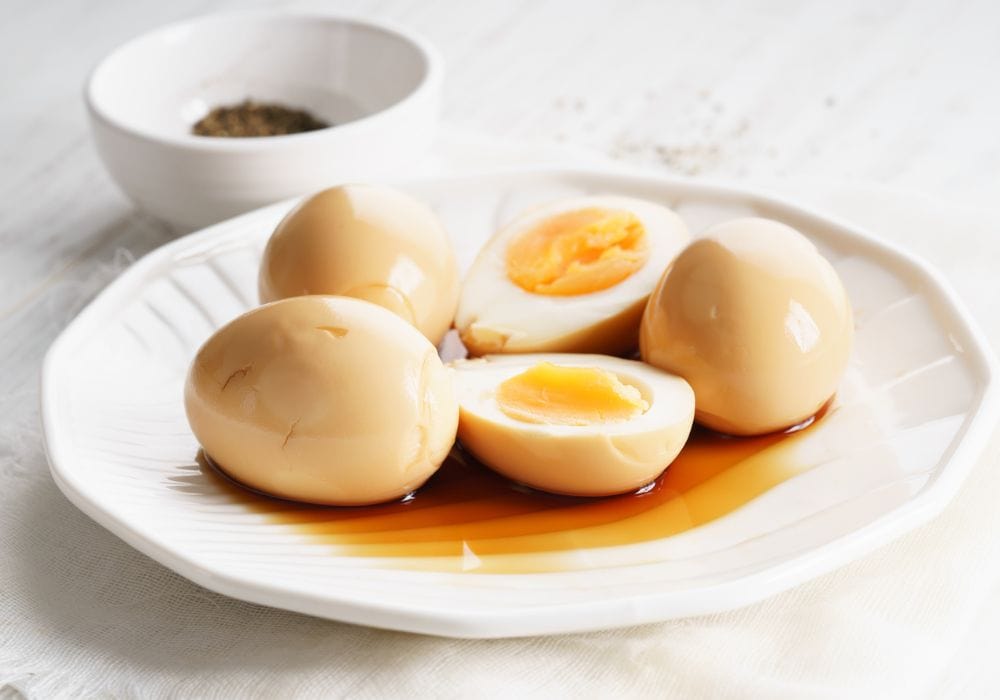
An old but good egg
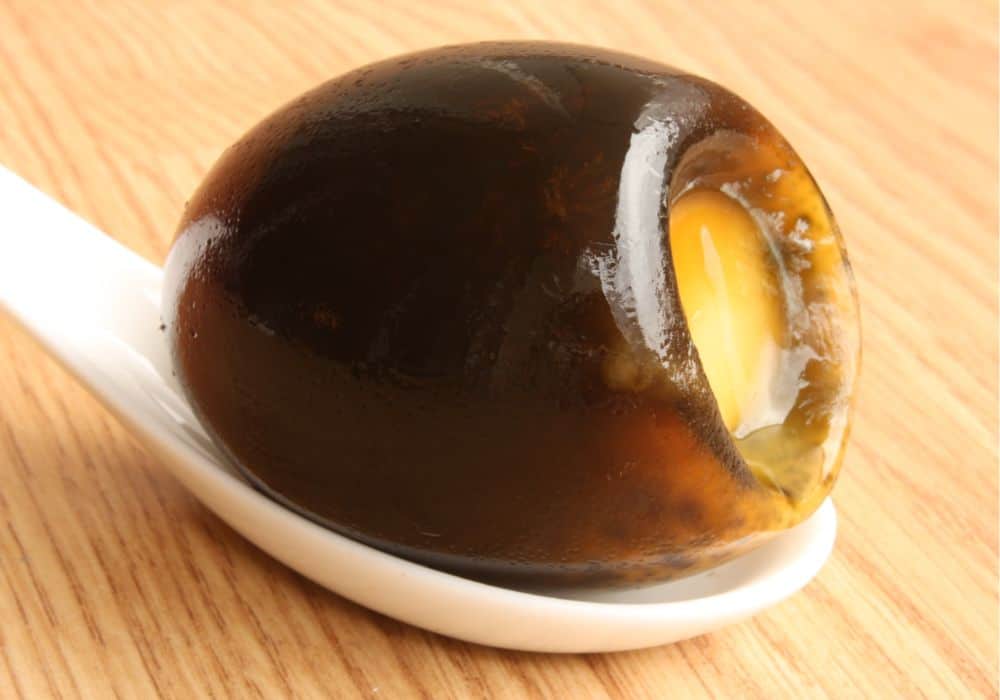
One of the most famous delicacies of Chinese cuisine is the so-called century egg. Counterintuitively, this isn't the prank of our apartment's previous owner, who bricked the egg into the wall for a questionable prank. It's an intricately crafted delicacy with extraordinary health benefits.
The process of creating a century egg begins by placing the eggs in a tin vessel filled with a solution of clay, quicklime, salt, tea, rice husks, and water. This "bath" is left in a sealed container for approximately 100 days. During this time, the lime slakes, during which the eggs heat up and then cool, forming an airtight shell that protects them from spoiling. The eggs turn brown or black and acquire a jelly-like consistency, while the yolk turns brownish-green. It's also worth mentioning that the egg smells faintly of... sulfur. Sounds lovely, right?
Century eggs are served cold, usually with soy sauce, wine vinegar, or ginger. The Chinese say that a century egg is like wine: the older, the better. They are often given to sick people and those on diets for their exceptional health benefits. Century eggs are packed with vitamins and minerals. They are beneficial for liver function and vision, help regulate blood pressure, and even serve as an aphrodisiac (!).
The Secret of Filipino Fertility
A dish for true eggheads is balut, originating from Southeast Asia. Vegetarians should steer clear of their TVs at this point, as balut is a semi-developed duck or chicken fetus cooked in an eggshell. It's eaten whole, bones and beak included. In Vietnam and Laos, balut is more popular than hamburgers and pizza, and in the Philippines, it's considered a national dish. Like the century egg, balut is also considered an aphrodisiac. Filipinos believe that frequent consumption of balut is a way to achieve "iron" fertility.
And if that wasn't enough...
What's the best way to welcome spring? In our opinion, the Japanese do a wonderful job of celebrating the fleeting moments of cherry blossom during the Hanami festival. Meanwhile, the Chinese from Zhejiang Province believe there's no better way than by preparing eggs boiled in… urine, according to a collective ritual. This delicacy is prepared jointly by the entire city of Dongyang. To make it, according to tradition, the youngest residents are required to add urine to a bucket. The urine, collected in large cauldrons, is heated to a boil, and after a few minutes, the eggs are dropped in, ready to be eaten. Every young boy in Dongyang is obligated to taste these eggs. Are you already happy that we are celebrating Easter in Poland?
Enjoy your egg!