






The first written mention of sushi dates back to 718. Since then, billions of pieces of cooked rice combined with raw fish, seaweed, and vegetables have been consumed in Japan alone. Over the centuries, a specific canon has emerged for preparing and eating this dish. We encourage you to try following the rules at least once and celebrate your meal in this way, for example, with homemade sushi. Remember one important rule that applies in the Land of the Rising Sun: you must pour your heart into cooking, and then enjoy the feast and conversation together. The details of the technique are truly secondary.
Menu
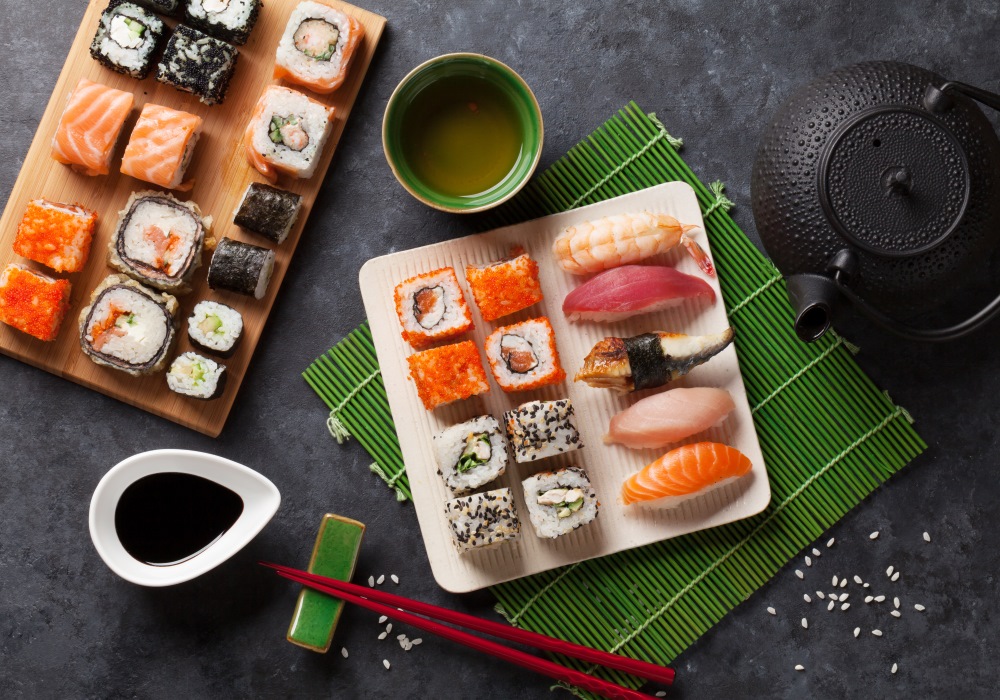
If you're visiting a restaurant and want to show respect for the chef, ask what special off-the-menu items they've prepared that day. This will show you know and appreciate that they visit the market every day at dawn and choose something special. These last-minute specials usually don't make it onto the menu. However, if you're making sushi at home, try serving it to the table in stages. Make a portion large enough for everyone to eat one piece. Then prepare another roll and serve it. This makes the meal last longer – we wait, we chat… It's also an opportunity to try something less familiar, given the lack of other sushi options. This is a counter to human preferences. Otherwise, most of us would immediately choose only our favorite pieces from the general portion. Remember that a sushi roll is always cut into a specific number of equal pieces (6 or 8) and should contain an odd number of ingredients.
Service

Before dining, guests are given damp towels so everyone can refresh their hands. A different plate may be placed in front of each person, and not because there's a lack of tableware. The point is for the sushi to look its best and delight the person about to eat it. When the pieces prepared by the sushi master move on the conveyor belt in a restaurant, each type has a different plate, perfectly matched to the intricately arranged arrangement. One important tip: if you're sitting at the counter watching the chef prepare sushi, don't interrupt him or ask questions. Let him fully concentrate on preparing the ordered portion of sushi. He does it like an artist.
Technique
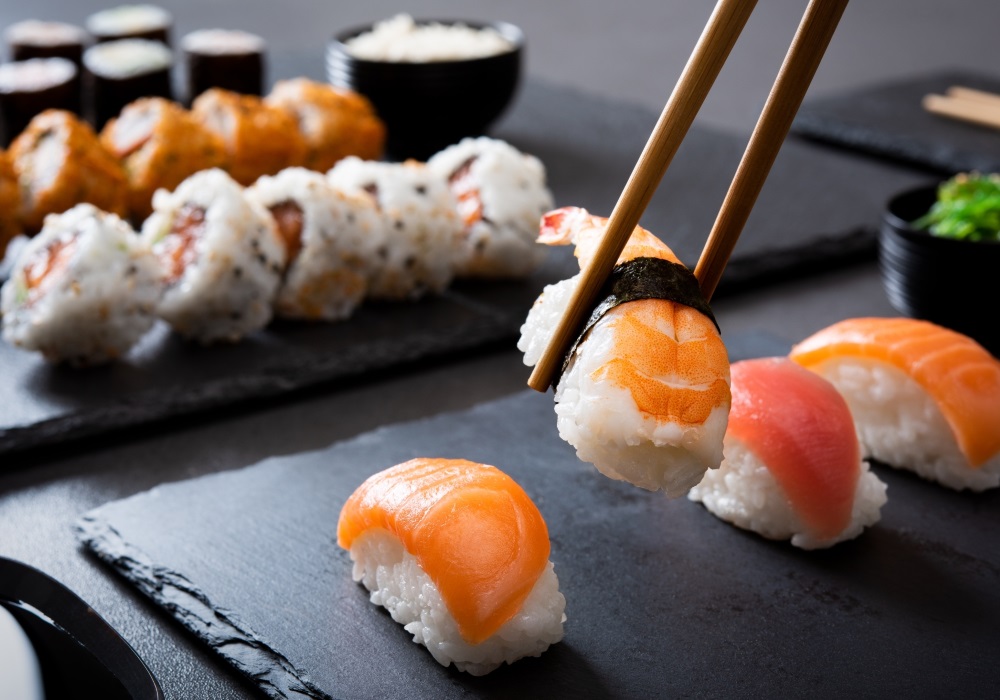
Sushi is not eaten with cutlery. It can be eaten with fingers or chopsticks. If you choose the latter, remember not to wave your chopsticks, cross them, rub them against each other, poke them into the rice, or point them at another person. Chopsticks are placed parallel to the edge of the table on a special stand and should be placed there whenever you are not eating. You should never mix soy sauce with wasabi in a bowl. In theory, a piece of sushi served in a restaurant, for example, already has a perfect balance of flavors, usually even a layer of wasabi inside. However, if you want a spicier or saltier version, you can add a dash of wasabi or a few drops of sauce (in Japanese restaurants, soy sauce dispensers should be opened to pour more or tilted to dispense the sauce drop by drop), but each topping is scooped separately. Dip the piece in soy sauce on the fish side, not the rice side. When putting it in your mouth, turn it so that this special layer reaches the tongue. The idea is to savor the flavor of the fish, not the rice. This is especially true for nigiri. Eat the entire piece at once; don't divide it or bite off a piece. Only then can you experience the entire composition of flavors in the right proportions. The exception in this regard is temaki, or Cloud rolled into a cone and filled with various ingredients. This type of sushi can be nibbled on. Between each piece of sushi, we always reach for pieces of marinated gingerto cleanse your taste buds. The Japanese always try not to waste food, so pour only enough into your bowl soy sauce how much you really need. You can always top it up.
Digestion
It turns out that eating sushi according to the etiquette has a certain impact on whether the meal will be "friendly" to the stomach.
– It is rightly believed that traditional sushi is an easily digestible dish – he explains Monika Wodyczko, MSc, clinical dietitian at De Care. "White rice is low in fiber, making it digested quickly and easily. Furthermore, raw fish is easier to digest than baked or boiled fish. This is because the protein in fish denatures, or coagulates, under high temperatures. This makes it a greater challenge for digestive enzymes, and therefore somewhat more difficult to digest than the protein in raw fish. The addition of wasabi, a type of horseradish, further increases the secretion of gastric juices, aiding the digestion of fish. People who don't eat large meals should eat six pieces of sushi. Remember that food expands when mixed with digestive juices. Therefore, eat slowly and chew thoroughly, and you'll sooner know when to stop eating. This will help avoid stomach aches from overeating."
