




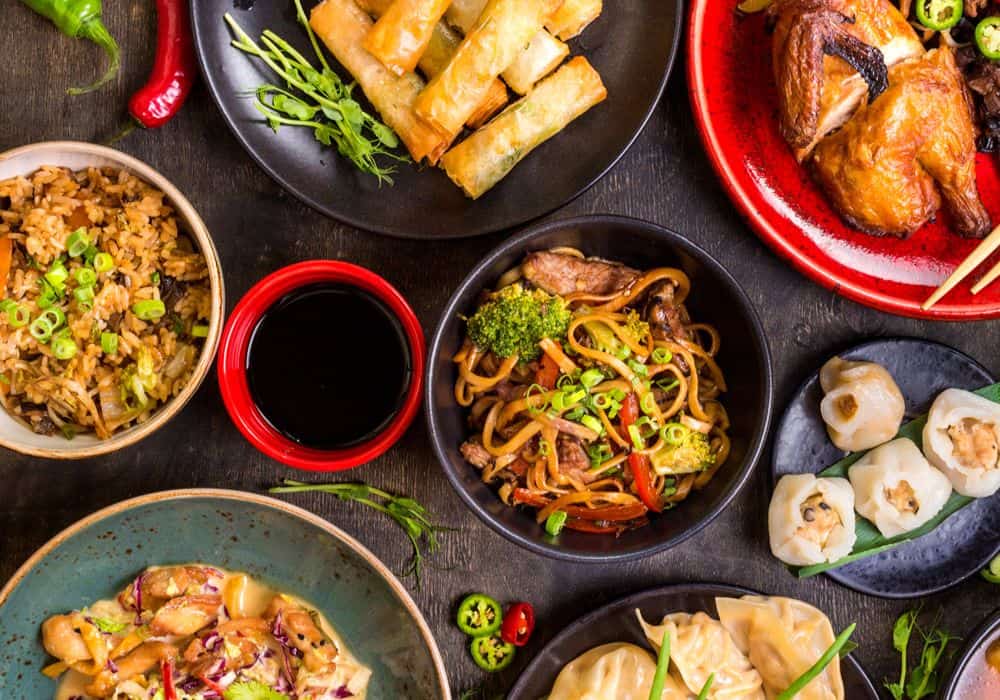
Shanghai It boasts one of the most delicate cuisines in China. It's both mild and sweet. Sauces are often sweetened with sugar and come in sweet and sour versions. If the smell of tofu puts you off, this might not be the best place for a vacation; for the brave, the inhabitants of this region have century-old eggs. Its location near the sea means the cuisine is rich in all kinds of fish, seafood, and seaweed.
Sichuan cuisine It's rather spicy. This is a place for lovers of chili and other peppers, as there's plenty of it in every dish. A lot of rice vinegar and various types of sugar are also used to balance the flavor. Garlic is popular, Sesame oil and ginger.
Cantonese cuisine It is the most popular cuisine known in the West. It is distinguished by its multitude of ingredients. It features large quantities of meat, not only commonly eaten meats like beef and poultry, but also snake meat, offal, and other parts that may not be to everyone's liking. Dishes are prepared quickly, preserving their natural flavor. The spices used are rather mild: ginger, soy sauce, and rice wine.
Beijing cuisine The world-famous Peking duck is the region's signature dish. It's quite time-consuming, and its most delicious part is its crispy skin. Here, the Chinese use a quick, fat-free frying method, which tenderizes the fried meat and vegetables and gives the dish a smoky flavor. Dumplings, such as steamed or fried wontons, are also an important dish in the region. They serve them with a variety of sauces based on soy sauce, chili, vinegar, and sesame oil.
Each region has its own distinctive dishes and flavors. Before planning a trip to China, it's worth considering what you want to try and what flavors you're ready for.
Sauces are ingredients of many dishes, and the Chinese combine them in a million different ways, creating perfectly composed flavors.
Popular and most frequently used sauces:
- light soy sauce
- oyster sauce
- sweet and sour
- hoisin sauce
important ingredients Chinese cuisine:
- rice
- noodles
- Sichuan pepper
- five spice
- shiitake mushrooms
- mun mushrooms
Does food heal and delight?
For the Chinese, meals must not only provide a delicious experience, but also ensure health. Chinese cuisine is inextricably linked to Chinese medicine.

Eating with chopsticks – it's not just the technique that counts!
Mastering chopsticks is difficult, but this skill alone isn't enough to avoid making mistakes and offending your dining companions. There are a few rules worth remembering.
- don't put food on chopsticks,
- After a meal, put them on special pads
- do not wave chopsticks, it is considered an insult
- don't lick your chopsticks
- do not cross your chopsticks because it portends misfortune
Behave yourself!
Table etiquette is very important. You should remember a few rules to avoid offending your host and to make a good impression.
- You must take off your shoes before entering a Chinese home.
- Please arrive at your scheduled time. Late arrivals will be considered offensive behavior.
- Start greetings with the oldest person in the family.
- Eat and drink whatever the host offers. Refusal is rude.
- The host sits at the table facing the door, with guests sitting on either side. Politely decline if the host offers you a seat of honor.
- The host begins to eat, and only then the others.
- Don't play with chopsticks (other rules above)
- After a meal, leave a little in the bowl. If the bowls are empty, it means your guests haven't had enough.
- Eat all the rice, because leaving it out brings bad luck.
- And something that might be traumatic for Europeans – the Chinese slurp and burp, expressing their enjoyment of food. And just like that, everything they taught us at home loses its meaning?
Now you know how and what to eat in China. Now try it. Chinese dishes from our recipes.
