




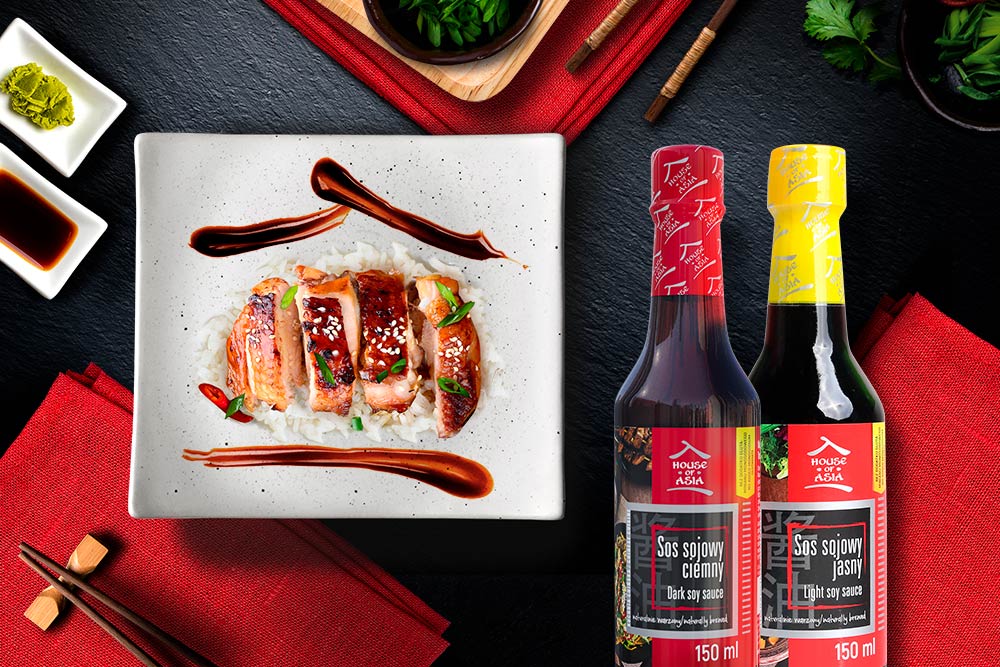
You don't have to be a trained chef to reap the benefits of using soy sauce in the kitchen. All it takes is a little willingness and an openness to new flavors, and your guests will be amazed by the new dish.

The original soy sauce recipe originates in China and dates back thousands of years. Initially, it contained fish, but today, soybeans are the primary ingredient. House of Asia offers several original soy sauces from China. The sauces are naturally brewed according to an ancient recipe, and most importantly, they are healthy. Free from genetically modified soy, artificial additives, and monosodium glutamate, they are an excellent alternative to salt. Anyone who cares about their health should have a good soy sauce in their kitchen!
Soy sauces available at House of Asia
Dark soy sauce
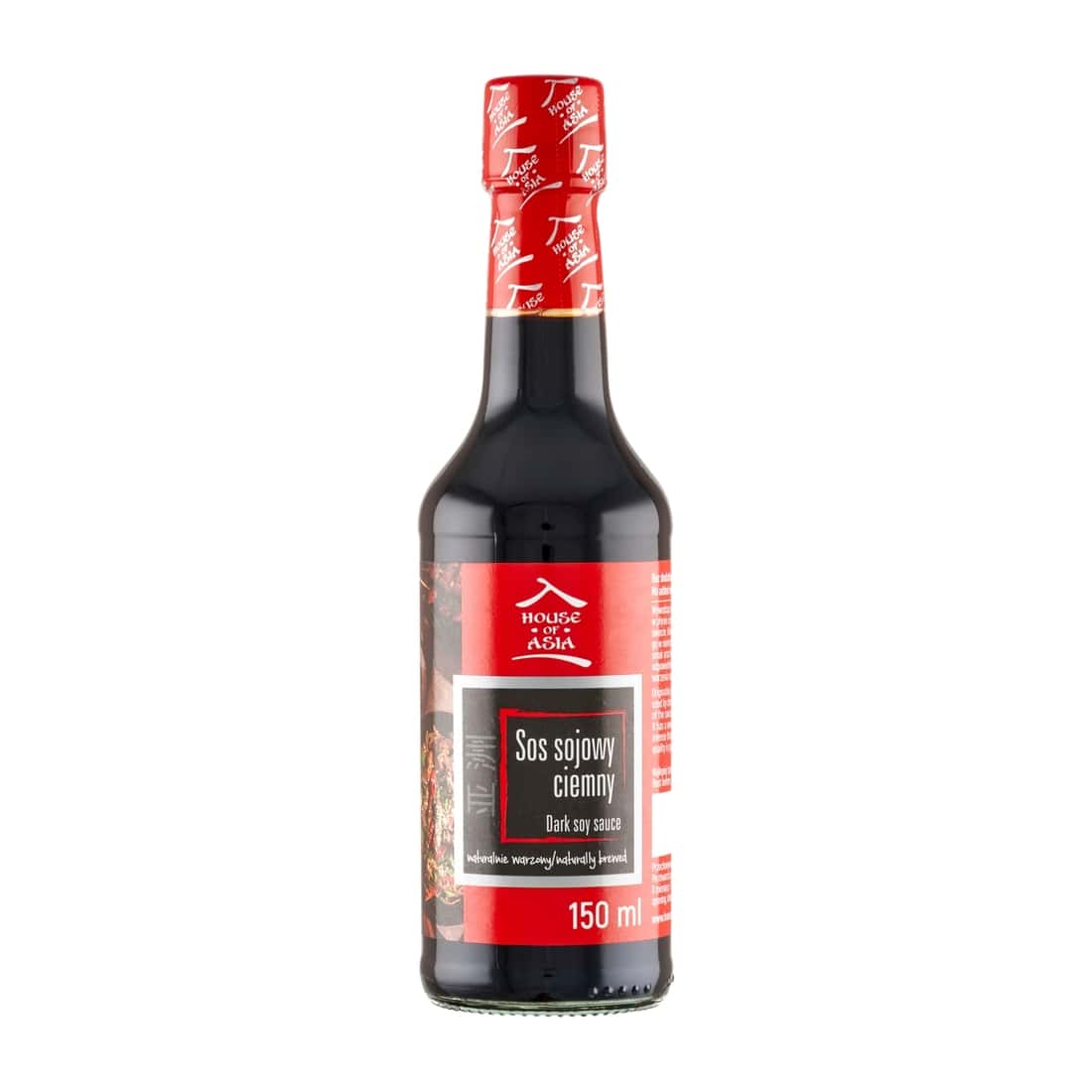
The traditional Chinese brewing recipe is slightly different from light soy sauce. The fermentation process takes longer than light soy sauce—it can take up to two years. Compared to light soy sauce, it is also thicker and more intense (and has a more tart flavor).
Dark soy sauce composition: soybeans 35%, water, salt, color: E 150a, wheat flour, thickener: xanthan gum.
The E 150a color is caramel, the so-called burnt sugar.
Available in 150 ml and 625 ml capacities.
Light soy sauce
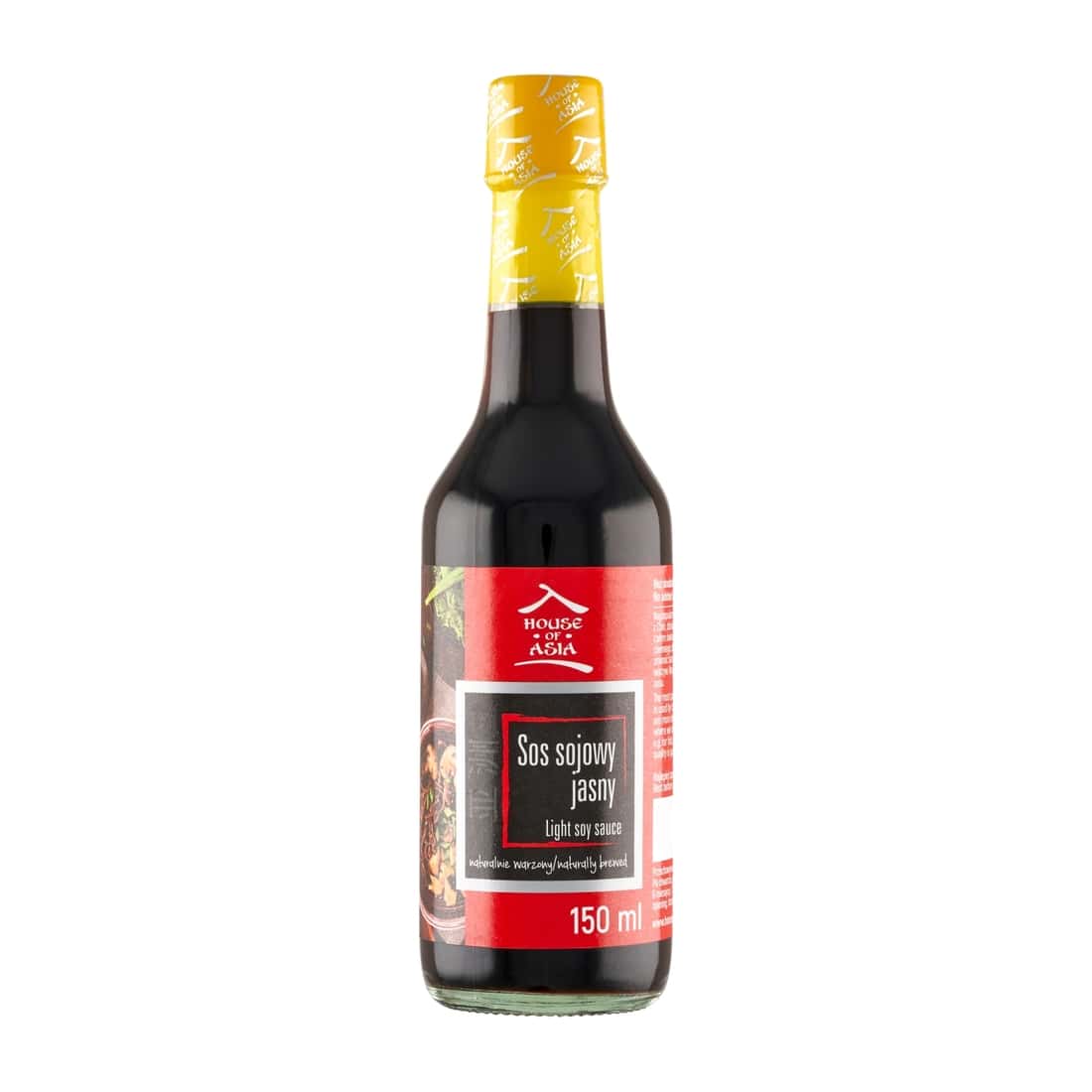
An authentic, naturally fermented Chinese soy sauce with a delicate aroma. It is characterized by a shorter brewing time (2 to 9 months) and a thinner consistency than darker varieties.
Light soy sauce composition: water, soybeans 34%, salt, wheat flour, sugar.
The addition of sugar is intended to enhance the taste of the product.
Available in 150 ml and 625 ml capacities.
Gluten-free light soy sauce
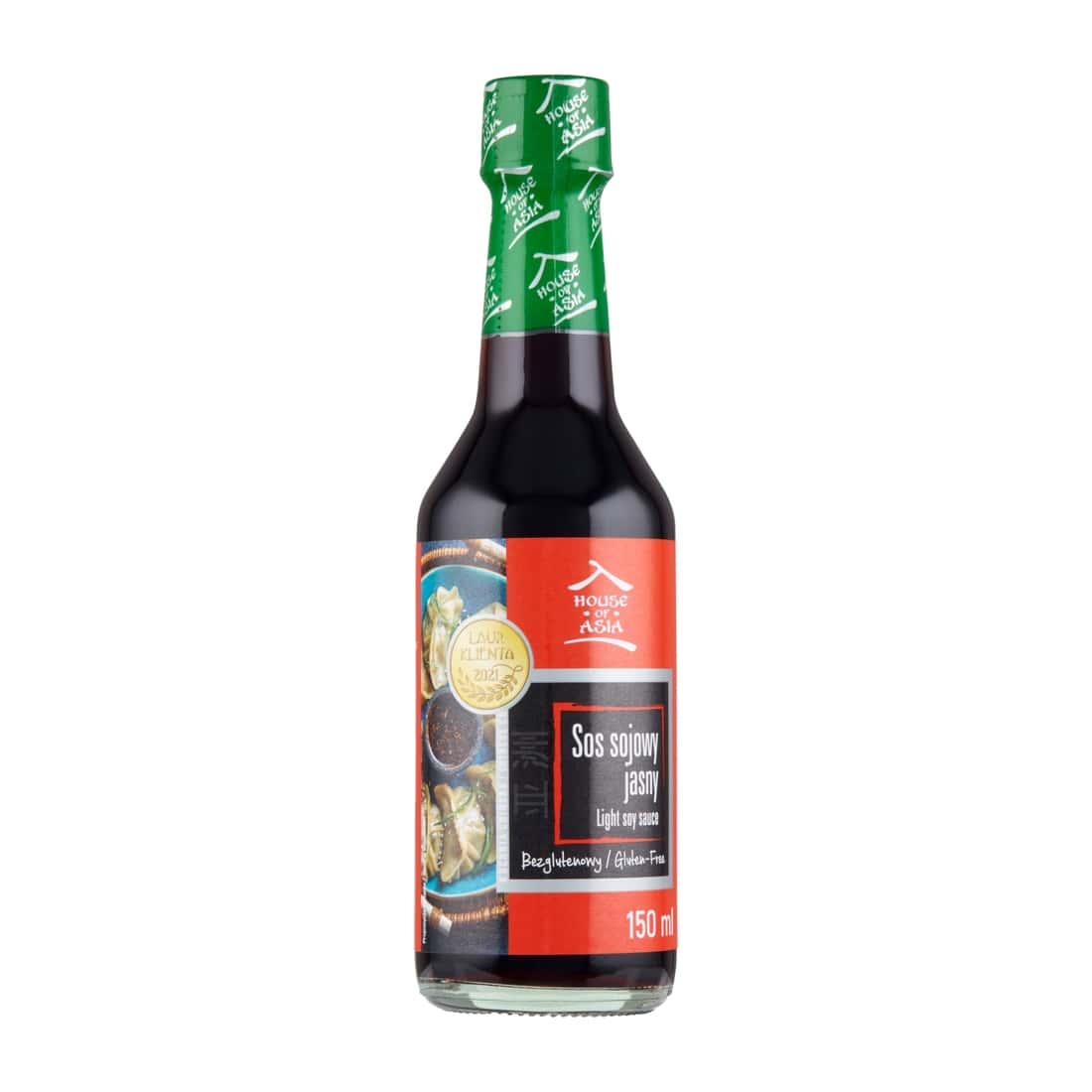
By replacing wheat with corn, this soy sauce is gluten-free. It's recommended as an alternative to traditional soy sauce for those on a gluten-free diet.
Light gluten-free soy sauce composition: water, soybeans 35%, salt, corn starch
Available capacity: 150 ml.
Which soy sauce should I choose?
Light soy sauce is an indispensable ingredient that enhances the flavor of delicate meats, fish, soups, sauces, and vegetable dishes. It's ideal for a variety of chicken dishes. It can be used interchangeably with Japanese soy sauce, as it has an equally light, thin consistency. It's also used to achieve a mild, oriental flavor, even in seafood dishes.
Dark soy sauce is perfect for marinating pork and beef, flavoring dark sauces, and as a garnish for spring rolls – either on its own or combined with fish sauce. Keep in mind that dark soy sauce can alter the color of the dish. You can also try combining soy sauce with rice vinegar and sweet chili sauce or ginger. When seasoning dishes, remember to add this sauce at the end of the preparation, as it can overpower the flavor of the entire dish.
What dishes should you use soy sauce for?
Due to its so-called umami flavor, soy sauce is a versatile and healthy condiment, capable of replacing popular liquid seasonings. Soy sauce is ideal for chicken, pasta, and marinades, but also for seasoning soups and sauces. It pairs well with asparagus and numerous dishes with carrots, parsley, or cauliflower. It's a great addition to Polish dishes like tomato soup or ground meatballs.
Here are some ideas for using soy sauce:
Chicken in teriyaki sauce
Fried pork with spicy vegetables

Pork tenderloin with vermicelli pasta and vegetables

