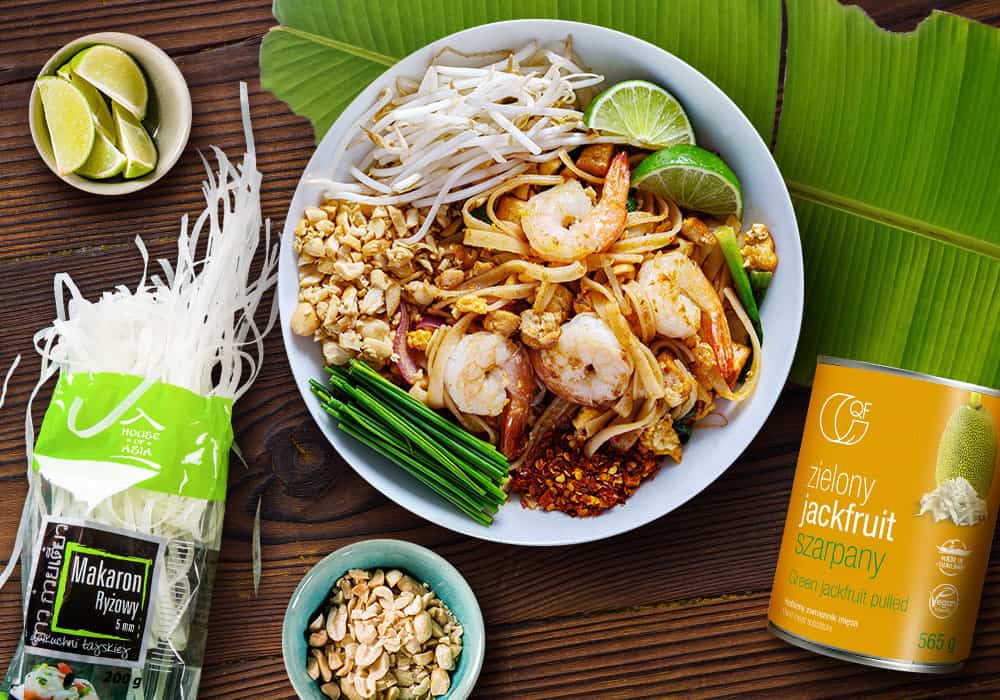


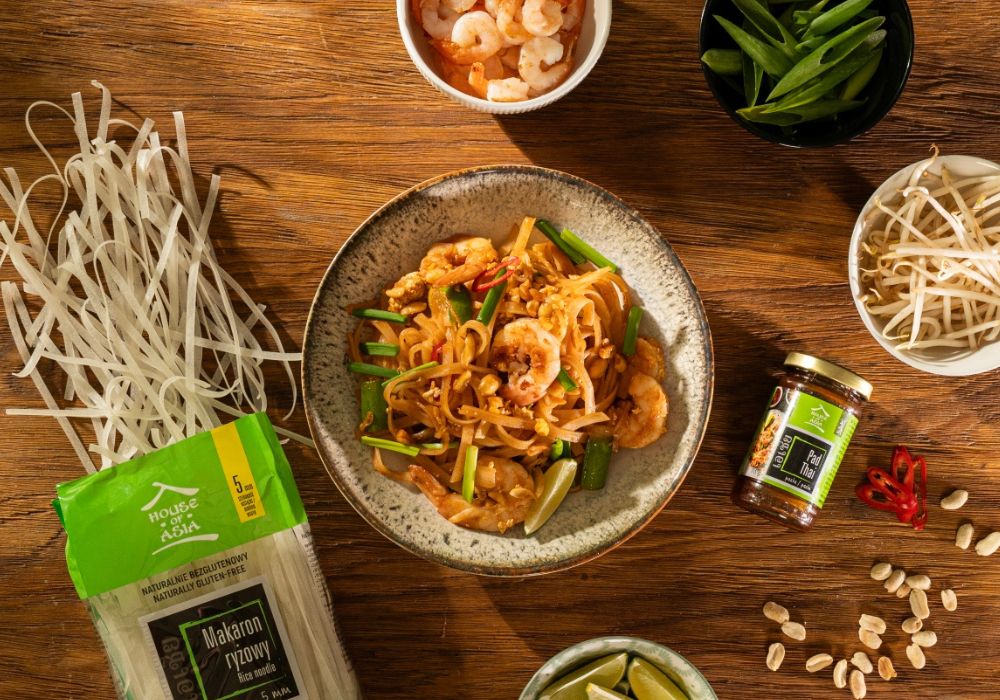
You wonder what's so special about a dish that has long ranked high among the world's tastiest dishes? Why do rice noodles stir-fried with vegetables or meat appeal to so many? Although Pad Thai is a very simple dish, the answer to these questions is complex. Firstly, the variety of textures and consistencies is crucial. Ribbons of springy and soft rice noodles tossed in an aromatic sauce complement pieces of meat and vegetables, as well as crunchy peanuts. Secondly, it's about convenience and saving time – Pad Thai is a typical dish that takes no longer than fifteen minutes to prepare. Thirdly, we have on our plate a vast array of diverse, even opposing, flavors, which together create an incredible experience for the taste buds. The balance between sweet, sour, salty, and bitter is crucial. In addition, there's the umami taste (meaning "something delicious"), which comes from foods containing natural glutamate, such as meat, soy sauce, and broccoli. When we eat Pad Thai, all the taste receptors located on the tongue, palate, and throat lining are stimulated. Each ingredient and the substances it contains affect approximately 10 taste buds. The signal from these buds is interpreted and determines whether we consider the dish delicious, bland, or unpleasant.
Appropriate proportions of ingredients
Every chef prepares Pad Thai slightly differently. There are many versions of the recipe, but certain ingredients remain consistent with the original version of the dish. If flavor intensity is the guiding principle, each conveys different sensations to the tongue's receptors. It's worth knowing that when a dish contains ingredients with different flavors, they complement, harmonize, and even enhance each other! Sour pairs perfectly with sweet. Salty flavors emphasize sweetness and umami. A touch of bitterness balances the sweet and sour. Sweetness slightly tempers the spicy flavor.
Find out what is responsible for the full bouquet of flavors in Pad Thai.
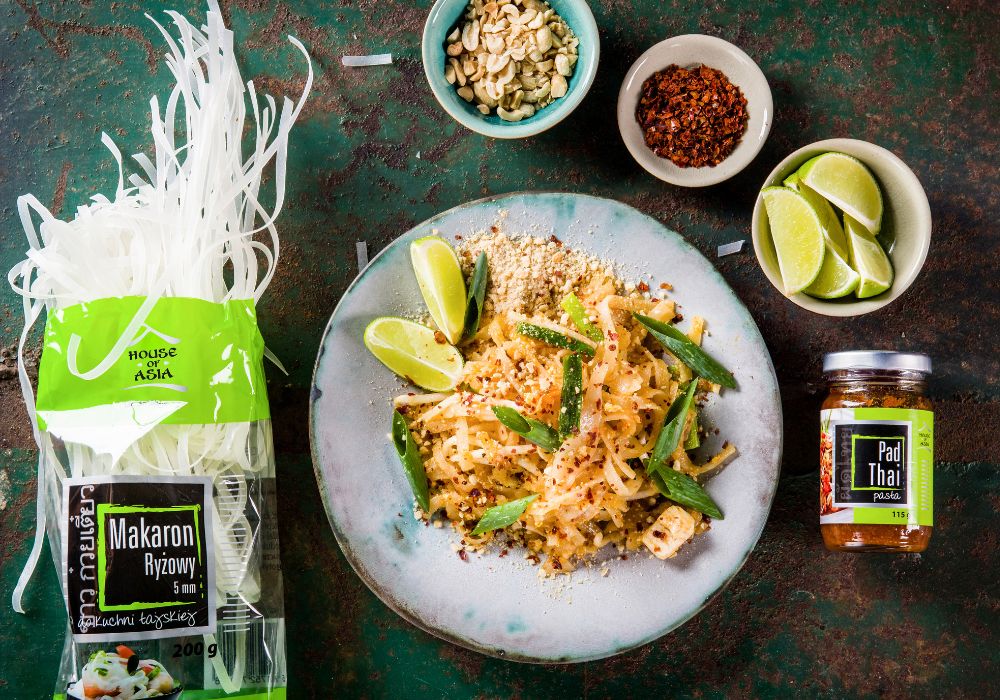
Neutral base flavor – It's a rice noodle made from rice flour, water, and salt. It absorbs flavors perfectly, making the dish light and delicate. It also carries the flavor of the sauce that will be used during frying.
A distinctive sauceThe sauce, which gives the dish its characteristic sweet and sour flavor, typically includes tamarind paste, fish sauce, soy sauce, garlic, chili pepper, and a pinch of sugar. By adjusting the dosage of each ingredient, you can make Pad Thai very spicy, sour, or slightly sweet.
Source of protein. Adding meat (poultry, beef, pork) or seafood (e.g., shrimp) makes the dish feel fuller longer. These ingredients also enhance the umami flavor. Meats also contain fat, which carries flavor. When preparing a vegetarian version of Pad Thai with tofu, you can enhance the flavor with more sauce.
Varied accessories They will complement the dish. Try to combine them so that they are not similar in taste and texture. The sweetness of the carrots can be offset by onions, shallots, garlic, and bell peppers. Cilantro, chicory, and celery add a touch of bitterness. Crispy bamboo shoots, mung bean sprouts, or roasted peanuts are balanced by soft zucchini. Adding an egg at the end of frying helps combine all the flavors and textures.
A refreshing sour note It's enhanced by adding a wedge of fresh lime when serving. Everyone can squeeze a little lime juice onto the fried noodles, if they like. Sometimes this effect is achieved with rice vinegar.
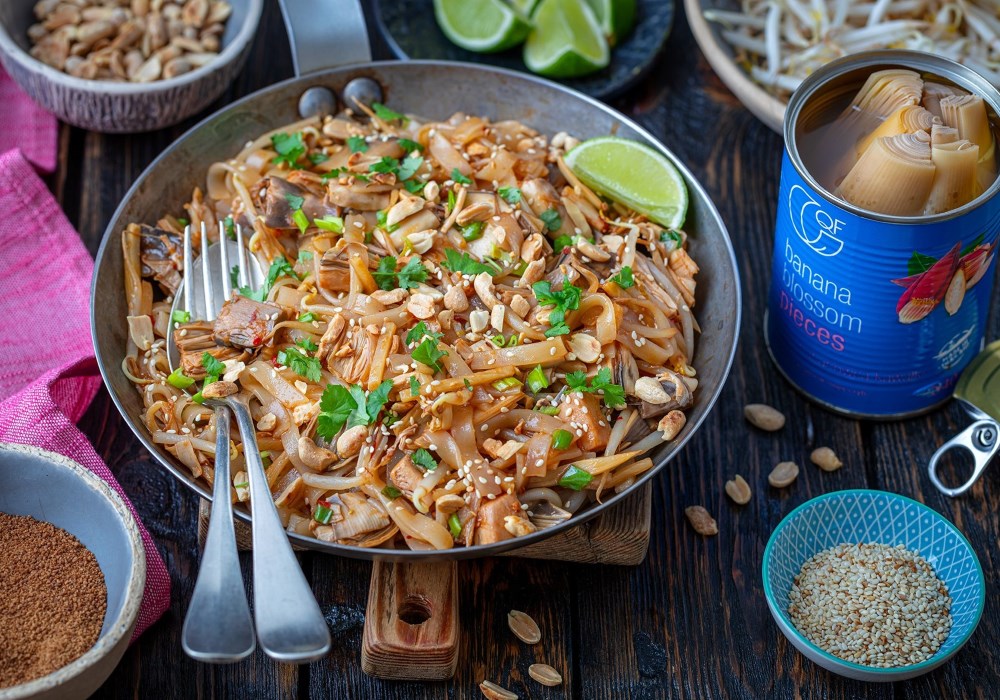
Pad Thai stimulates creativity
This dish is easily adapted to seasonal or locally available ingredients. The numerous and diverse versions of the dish consumed in Thailand and around the world are an example of this pursuit of personal culinary inspiration. In the southern regions of the country, seafood—octopus, shrimp, and mussels—are more common, and the dish itself contains a generous amount of chili and is very spicy. In Bangkok, however, Pad Thai is slightly sweet, nutty, and uses more vegetables. International versions of the dish include a popular recipe in the United States, which includes additional sugar, tofu, and vegetables (meat versions are less common). In Malaysia, curry is added to soy sauce and chili. In Vietnam, garlic and ginger enhance the flavor of the dish. In Japan, vegetables and meats may be accompanied by thin slices of seaweed or mushrooms. Some even sprinkle the pasta not only with peanuts but also with grated Parmesan cheese.
This is further proof of how versatile Pad Thai is. It can be freely modified and diversified, adapting the recipe to local preferences or the tastes of your household. Even the way it's served will influence the flavor. Instead of serving it on a plate or in a bowl, you can wrap it in rice paper (like spring rolls), an omelet, a tortilla (like a burrito), or serve it on lettuce. It all depends on your imagination, creativity, and the circumstances. Pad Thai prepared as street food and served, for example, in a box on a Thai street, will be just as delicious as one you make at home. Original recipe Pad Thai with chicken leaves plenty of room for action for anyone craving something delicious and filling. Consider it inspiration…