





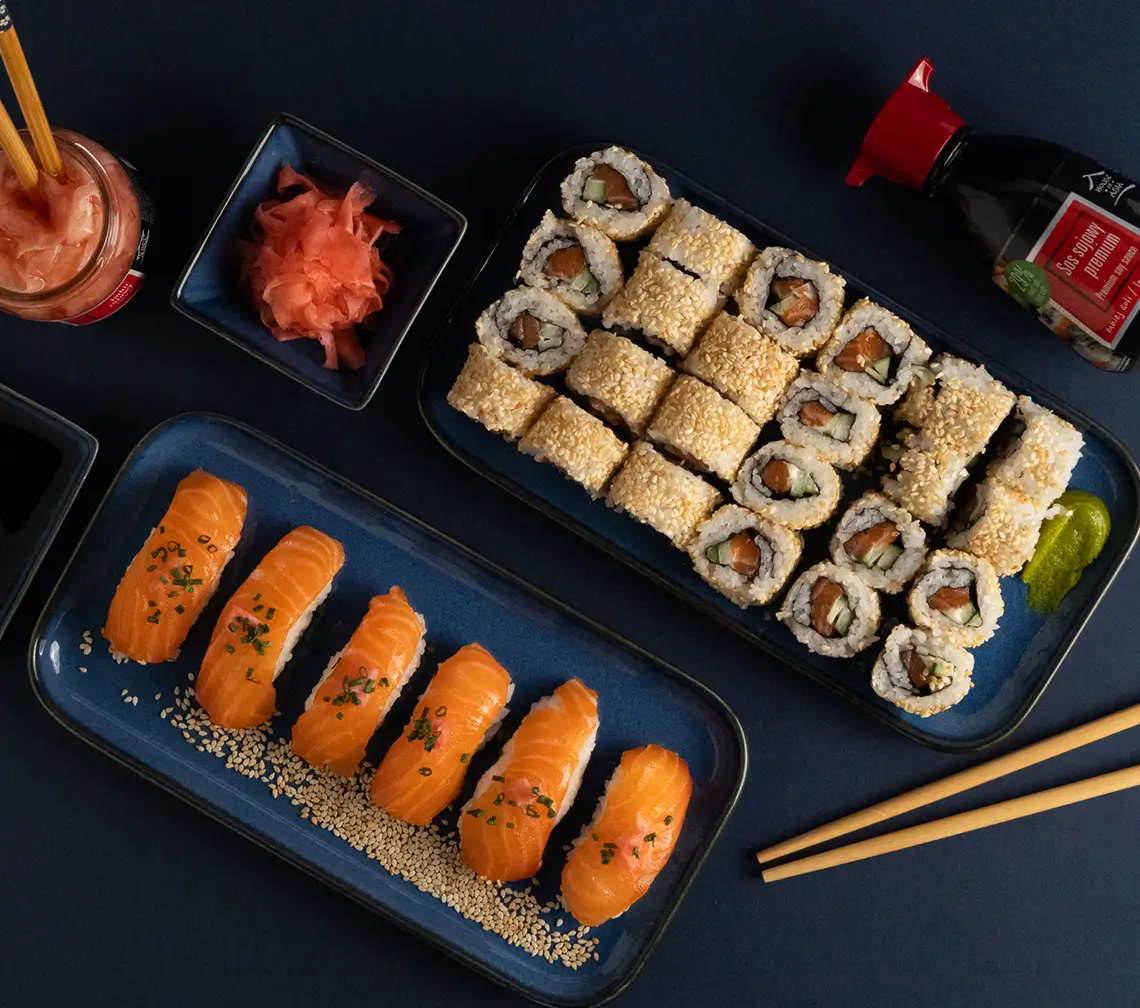
The sheer variety of forms makes sushi surprising, even for those who regularly visit Japanese restaurants. Nigiri, maki, hosomaki, futomaki, uramaki, and temaki differ not only in appearance but also in preparation, proportions of ingredients, and serving methods. It's no wonder, then, that the names of individual types of sushi can be confusing, especially for those just beginning their adventure with Japanese cuisine.
If you're wondering what the difference is between nigiri and maki, what futomaki means, or which types of sushi are best for beginners, this guide will clear up any doubts. Learn about the most popular sushi varieties, their distinctive ingredients, and serving methods, and discover the rich world of this Japanese delicacy.
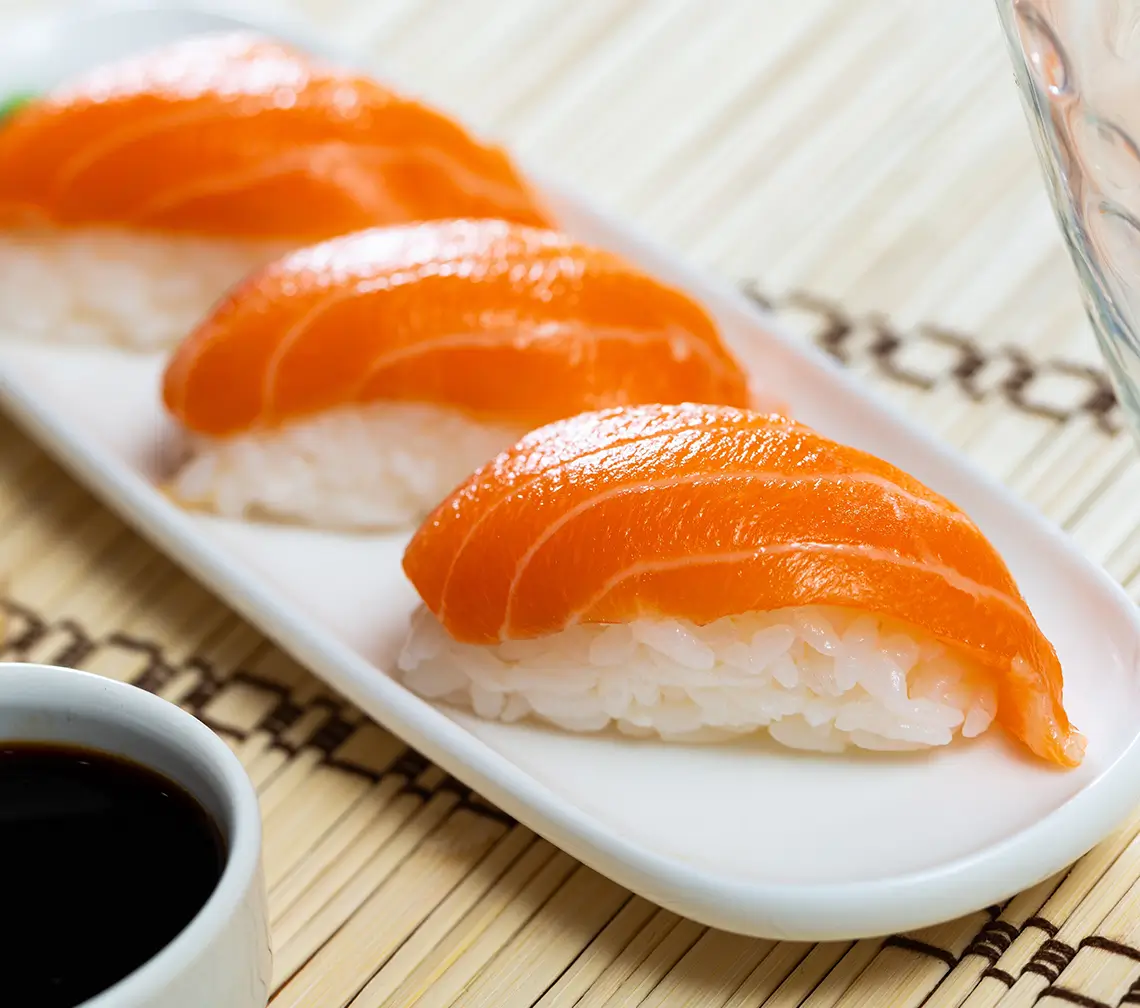
Nigiri – the most popular type of sushi with a piece of raw fish
The most popular type of sushi. These are hand-formed portions of rice, topped with a piece of fish, squid, octopus, or Japanese omelette. A thin layer of wasabi adds flavor. An example variety is nigiri unagi (nigiri with eel).
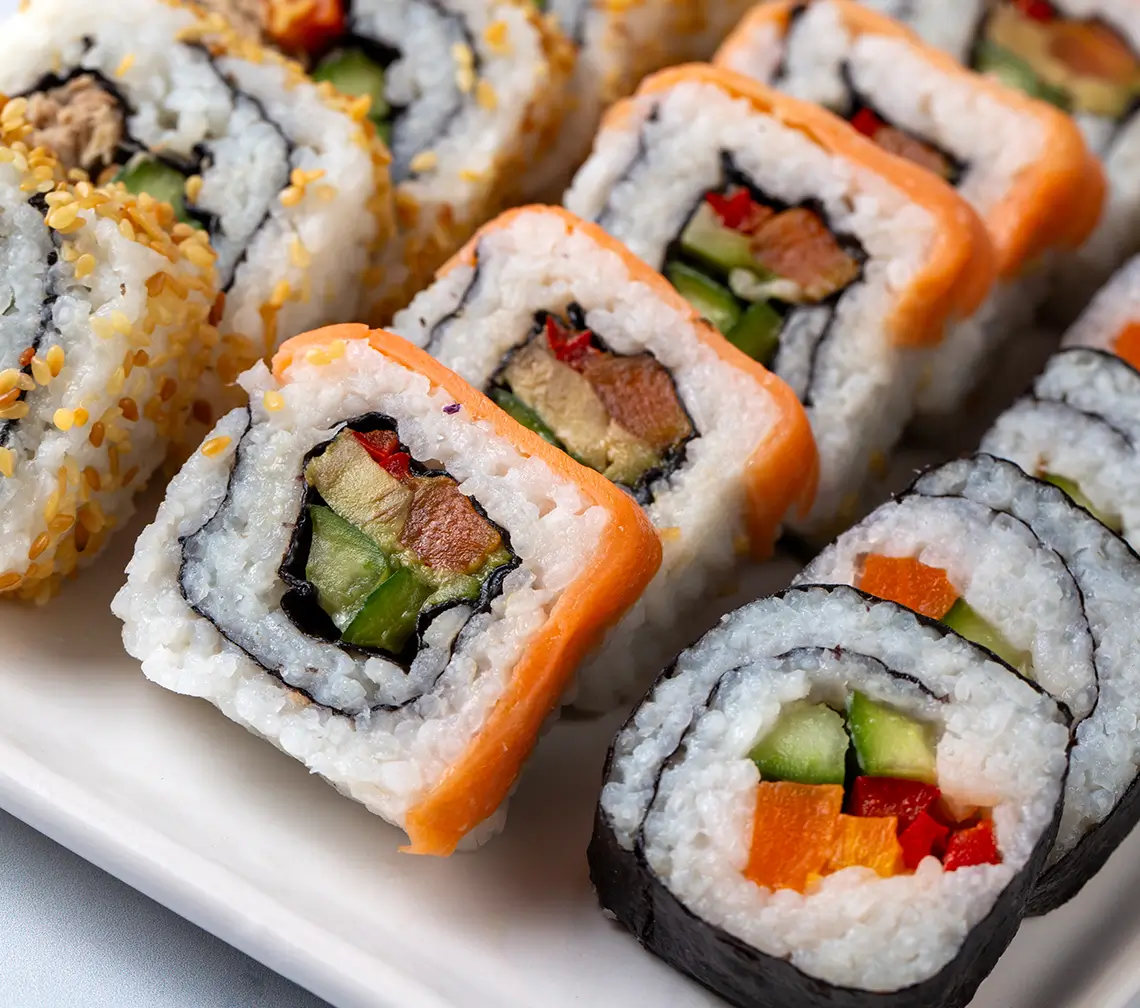
Maki sushi – traditional rolls wrapped in nori seaweed
Maki means "to roll" in Japanese. This type of sushi is a roll of rice with toppings wrapped in pressed nori seaweed and cut into pieces. The filling can be fish, seafood, or vegetables (e.g., pickled radish or pickled gourd). A bamboo mat is used to roll them.
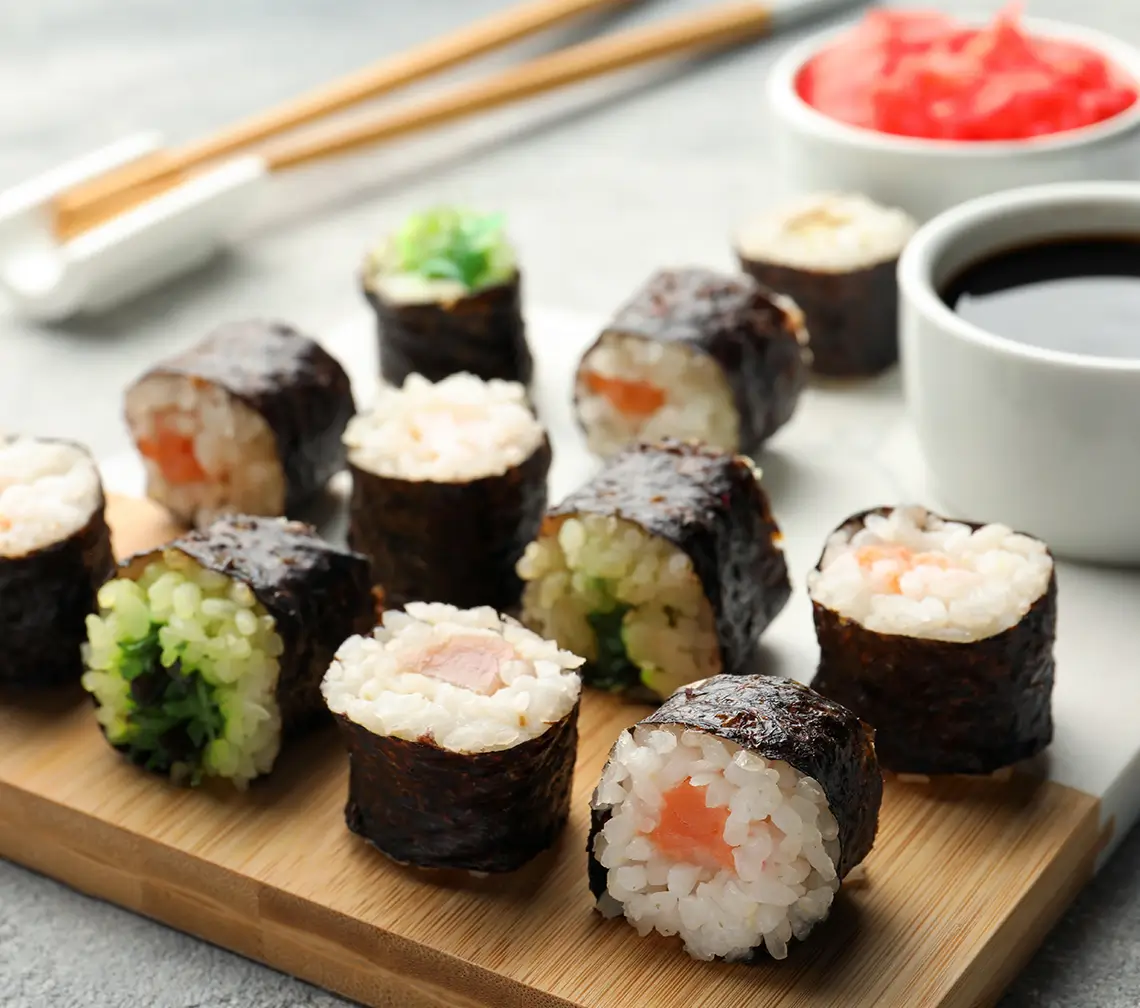
Hosomaki – the most popular thin single-component rollers
This is one of the popular varieties of sushi made, rolled, and eaten in Japan and around the world. Hosomaki literally means "thin roll" in Japanese. It is a type of sushi in which the filling ingredients and rice are wrapped in nori (roasted seaweed) on the outside. Each piece is approximately 2-3 cm in diameter.
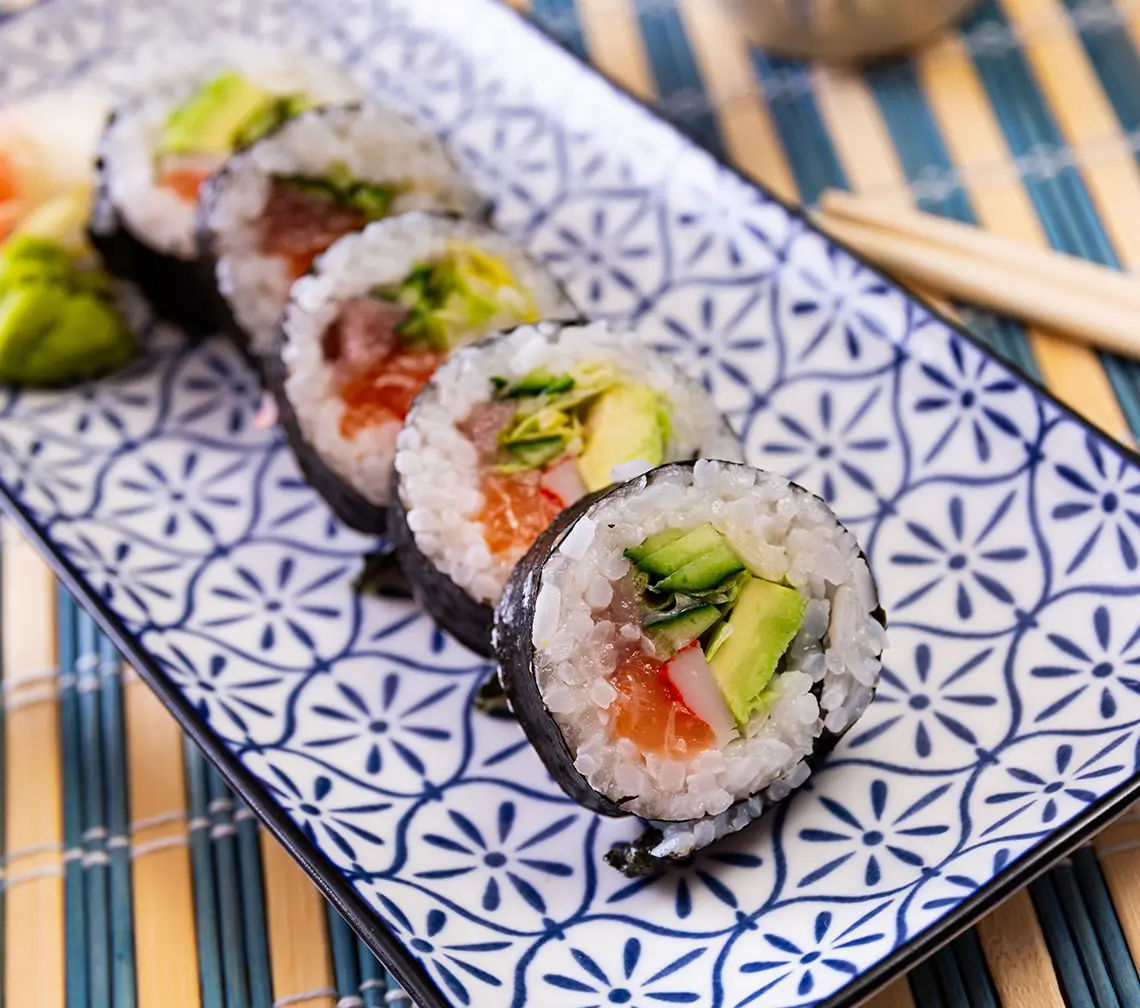
Futomaki – rich and thicker multi-component rolls
A richer version of hosomaki (approximately 4-6 cm in diameter). They are distinguished by their larger size than other types of maki, and the nori is inside the roll, encasing the rice and filling. Traditionally, futomaki contains various filling ingredients, often in the form of vegetables, fish, or tamago (Japanese omelet). The roll should contain at least four ingredients, including fish and various vegetables.
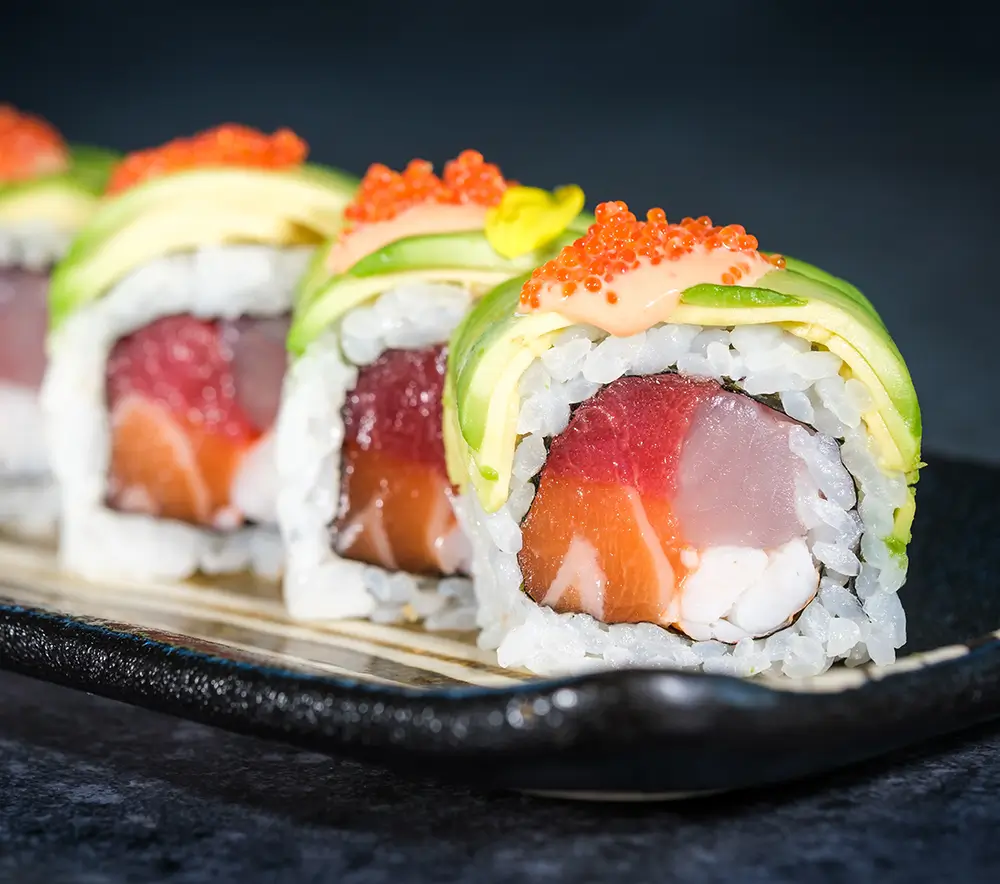
Uramaki sushi – reverse rolls, i.e. the popular California roll
Ura means "upside down" in Japanese. In uramaki, rice is on the outside and seaweed and other ingredients are inside. The outer layer of rice is often sprinkled with sesame seeds. The most popular type of uramaki is the American version. California poppies, most often filled with crab sticks, avocado and cucumber.
Lesser-known sushi varieties you must try
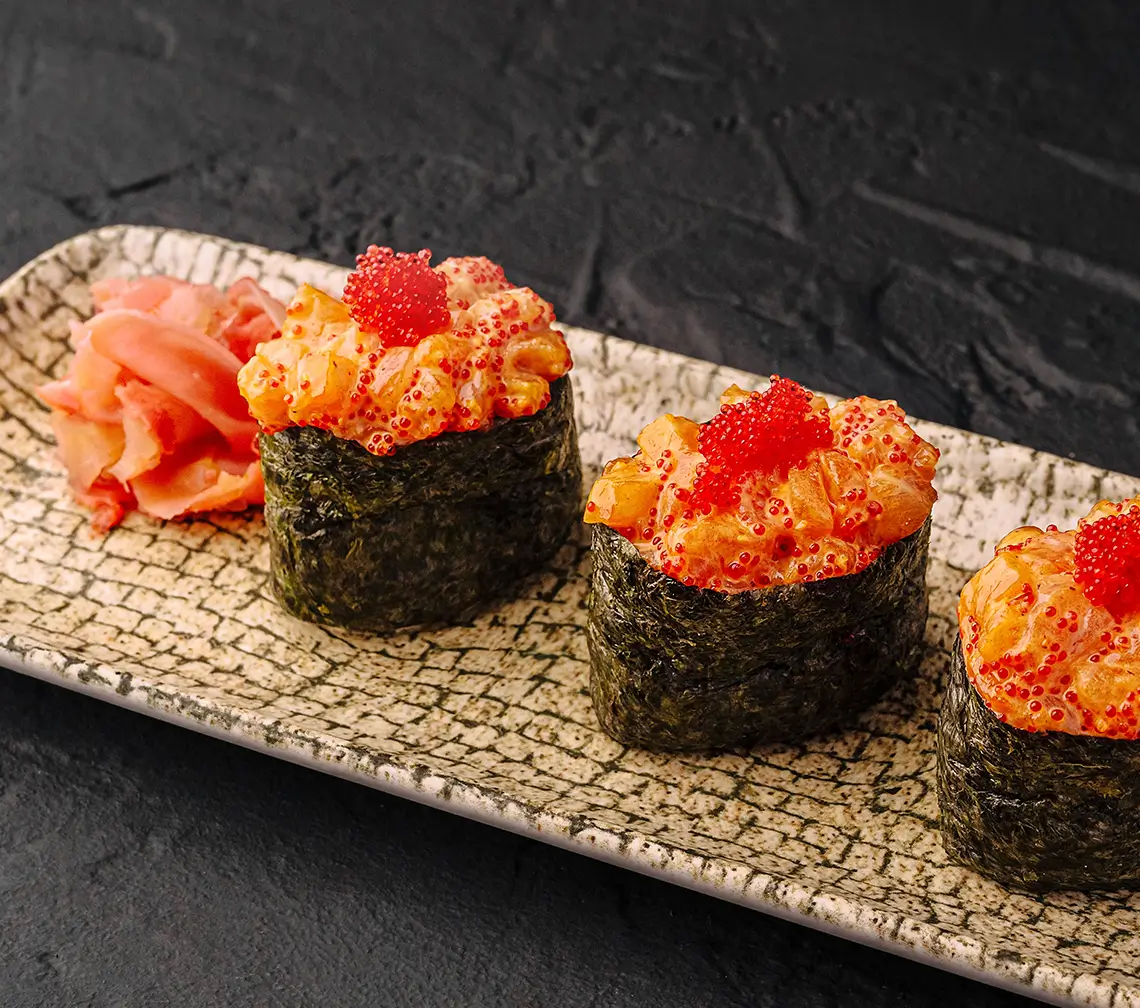
Gunkan maki – rice boats filled with rice and toppings
In this variation, the rice forms a boat into which the toppings (usually roe or fish tartare) are placed. Each portion is wrapped in nori.
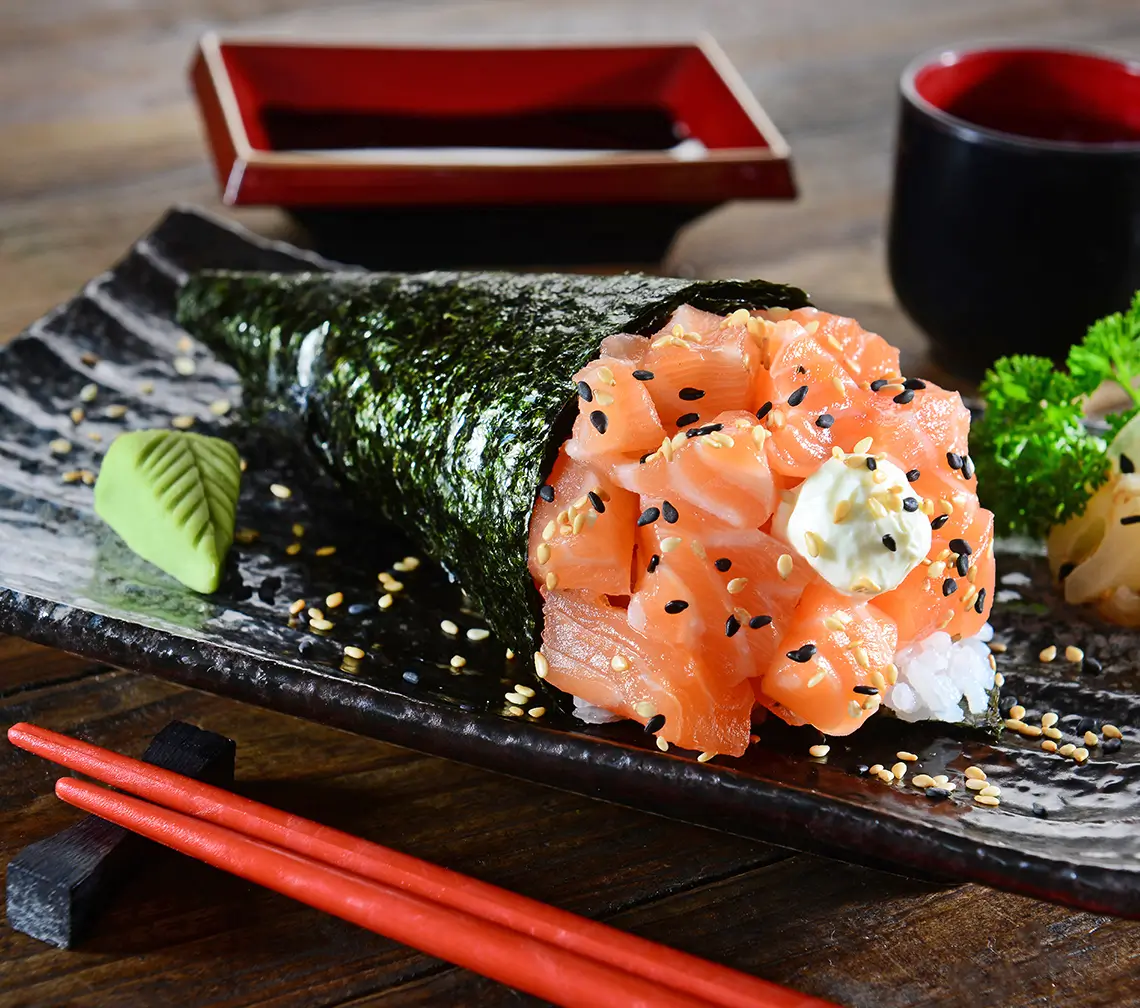
Temaki – unique cone-shaped sushi
Cones made of pressed nori, filled with rice and toppings (fish, seafood, vegetables, Japanese omelette or mushrooms).
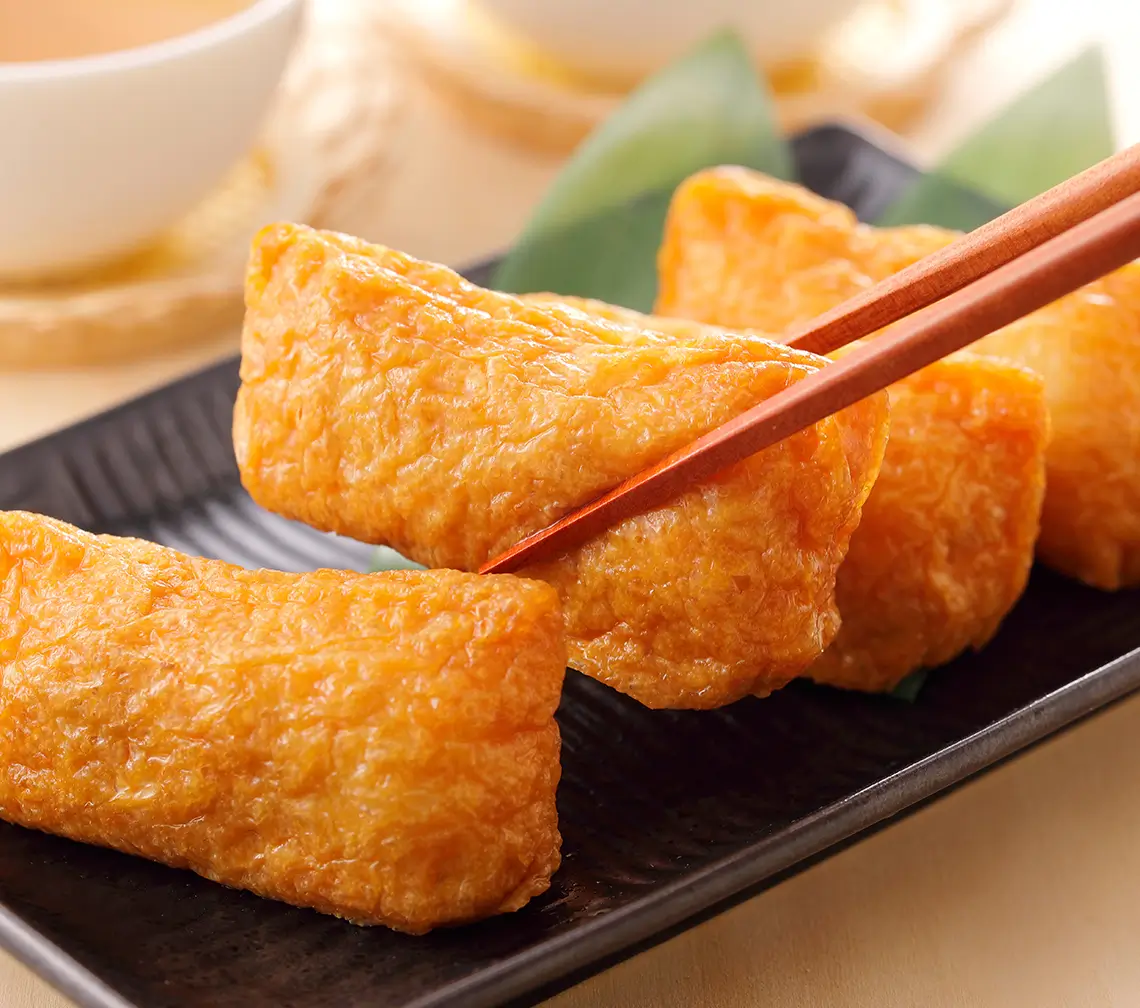
Inari sushiand – sweetish tofu pockets
Pockets of thin sheets of fried tofu with rice. They are usually served as a side dish with classic sushi varieties.
Date maki and Tempura maki – modern alternatives to traditional roller skates
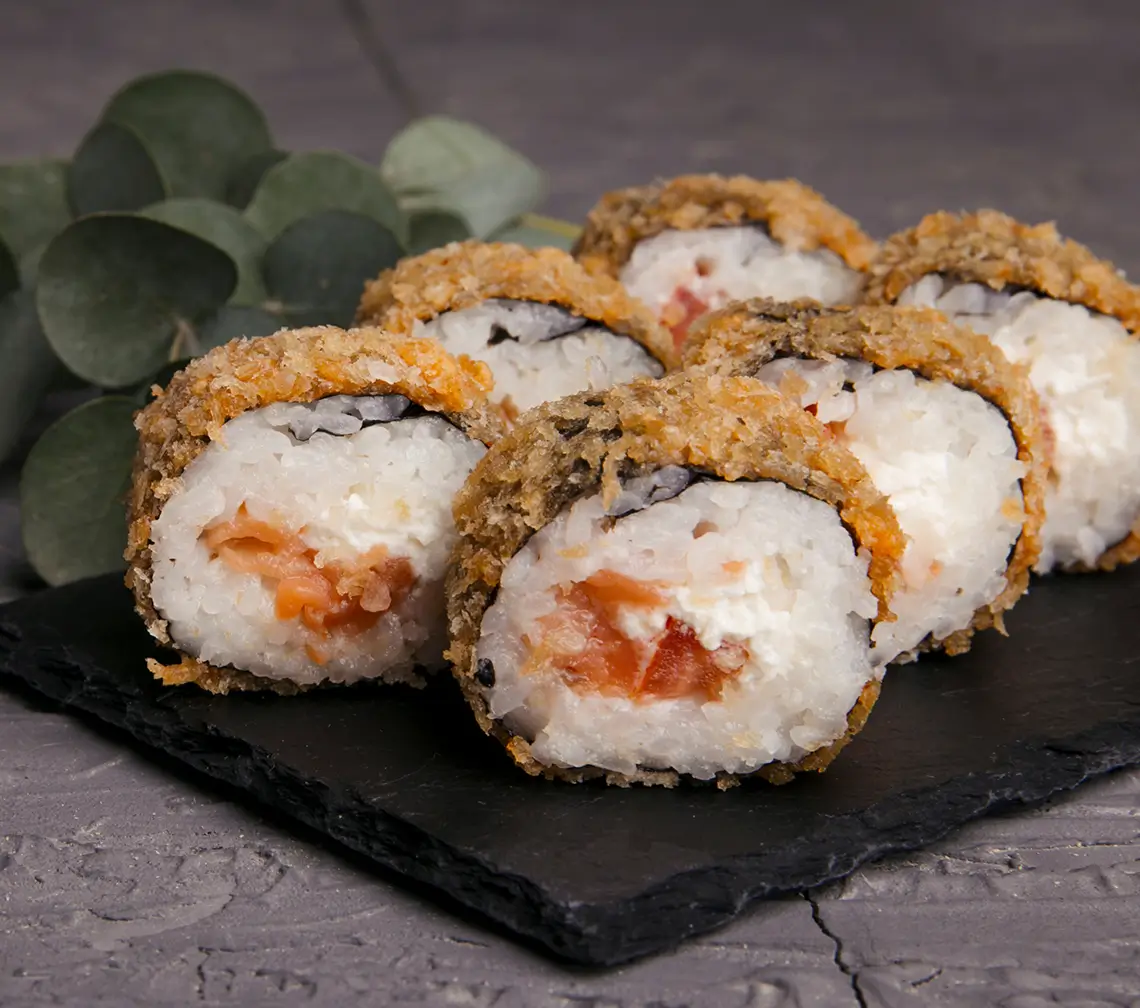
Tempura maki – various types of maki coated in delicate tempura, a special Japanese dough, and then fried in hot oil.
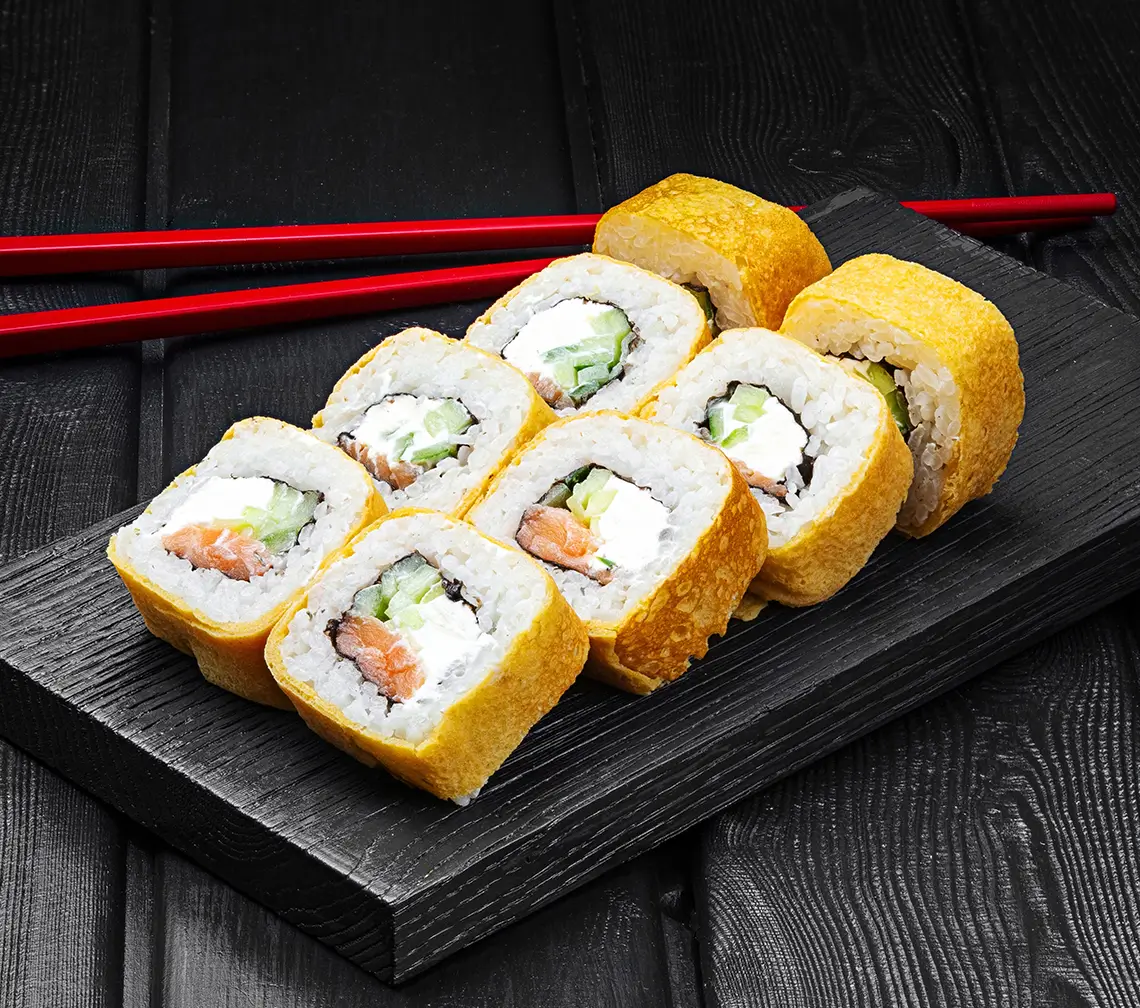
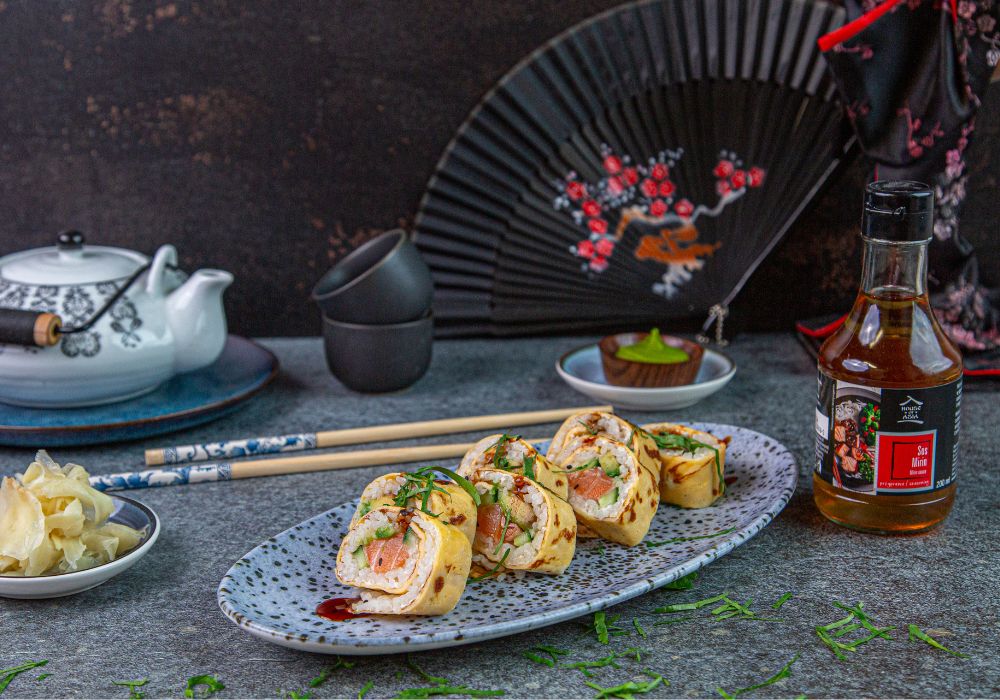
Date maki – rolls wrapped not in seaweed, but in sweet Japanese omelettes.
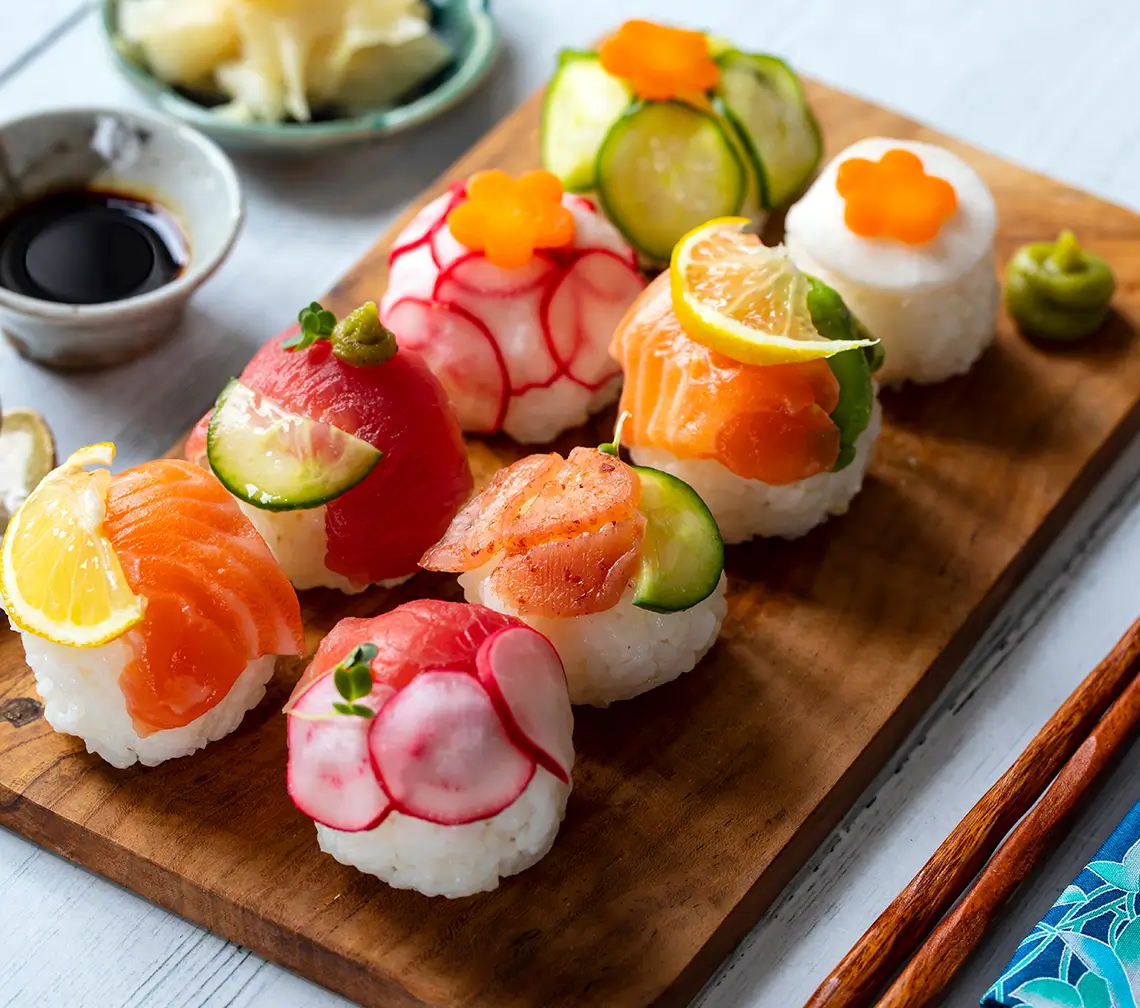
Temari sushi – an interesting alternative to maki and nigiri. Similar to oyakomaki, their base is a rice ball covered with an additional ingredient. Great importance is placed on their appearance. The name comes from "temari" – balls traditionally made of multicolored silk, once used for play, but today they serve only decorative purposes.
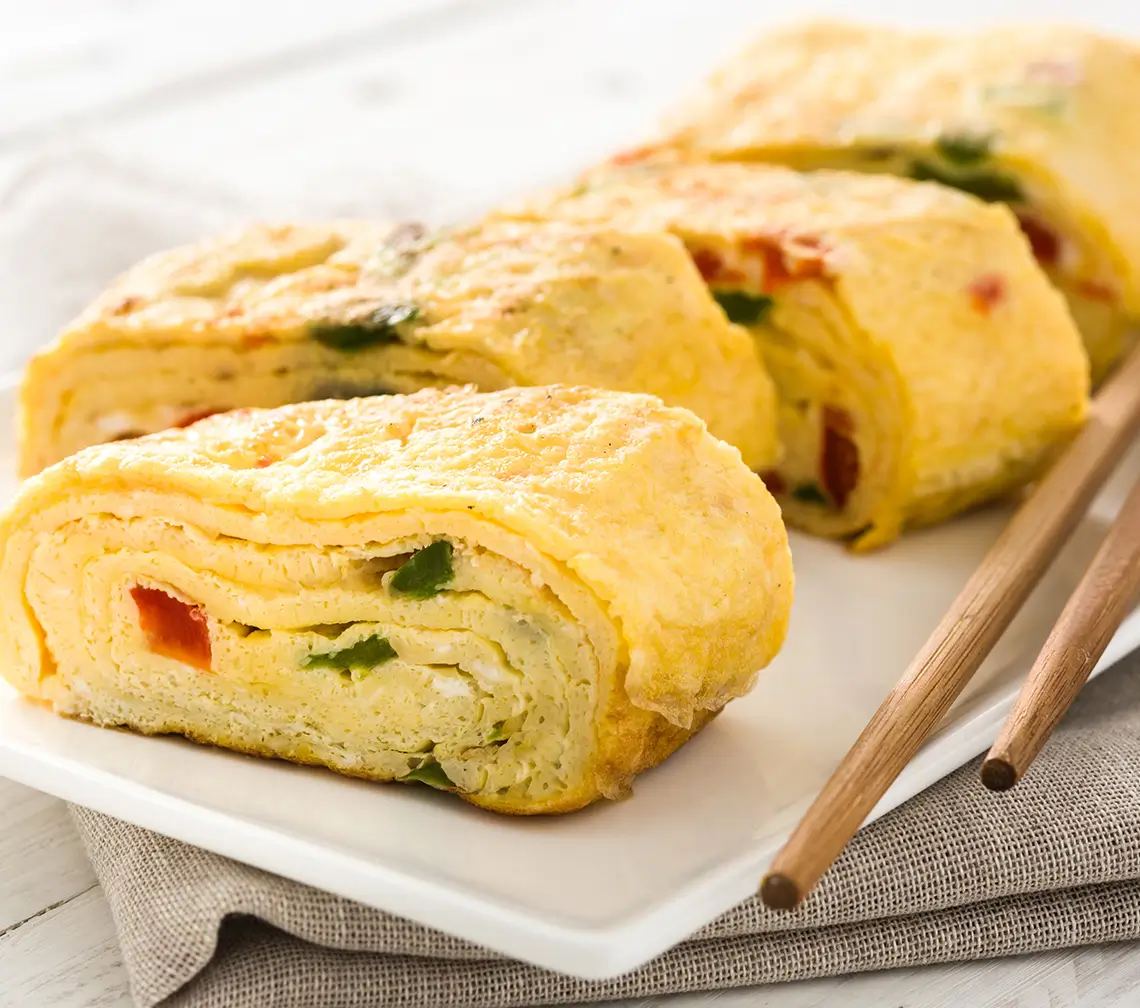
Tamago Omelette – is a traditional Japanese dish that is a type of omelette made with eggs and other ingredients. It is often used as a filling in sushi, especially in role-maki (sushi rolls). A tamago omelette has a unique texture and flavor, often sweet and slightly fluffy.
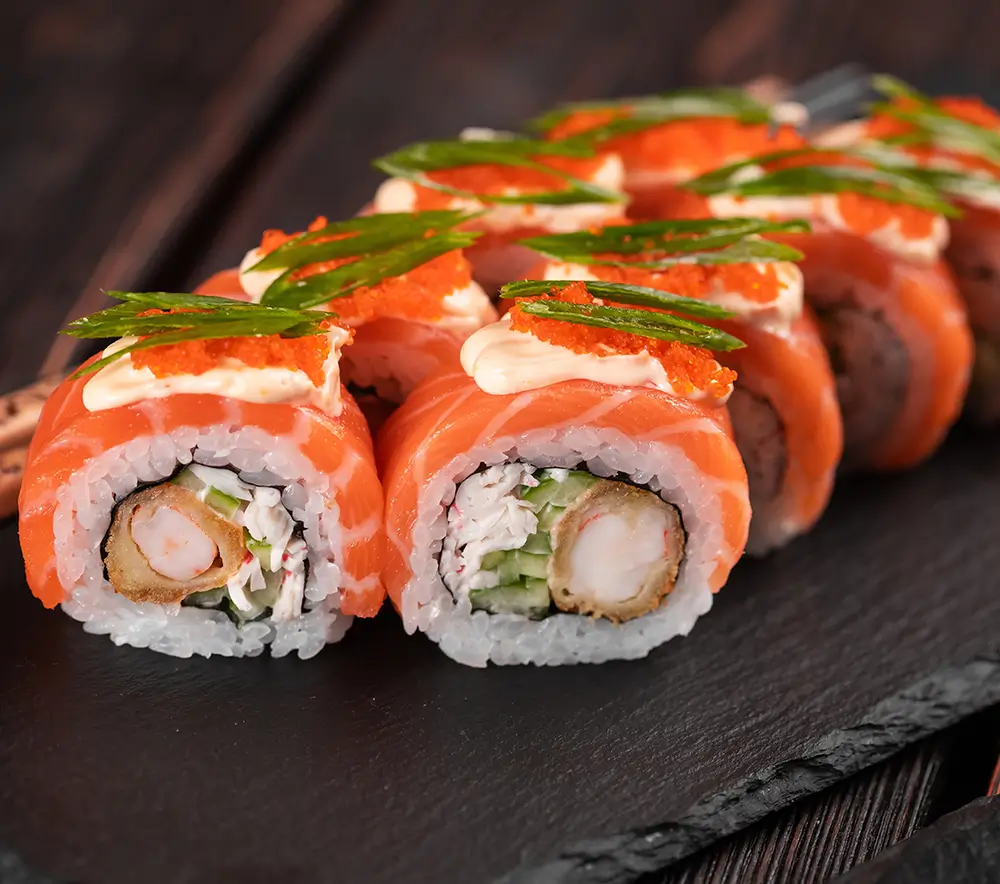
Kaburamaki – uramaki topped with additional fish or vegetables.
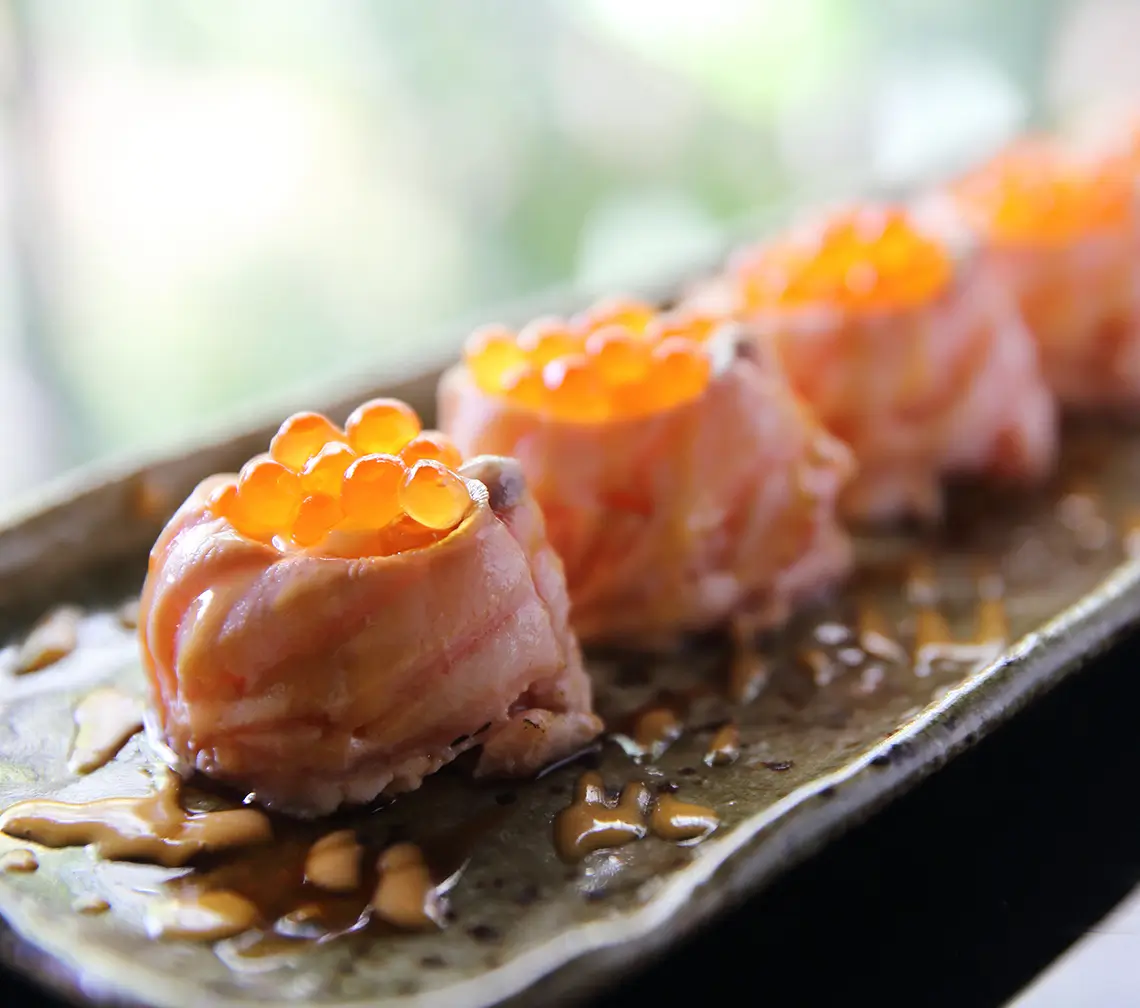
Oyakomaki – rice balls wrapped in raw fish filled with stuffing (quail egg or roe).
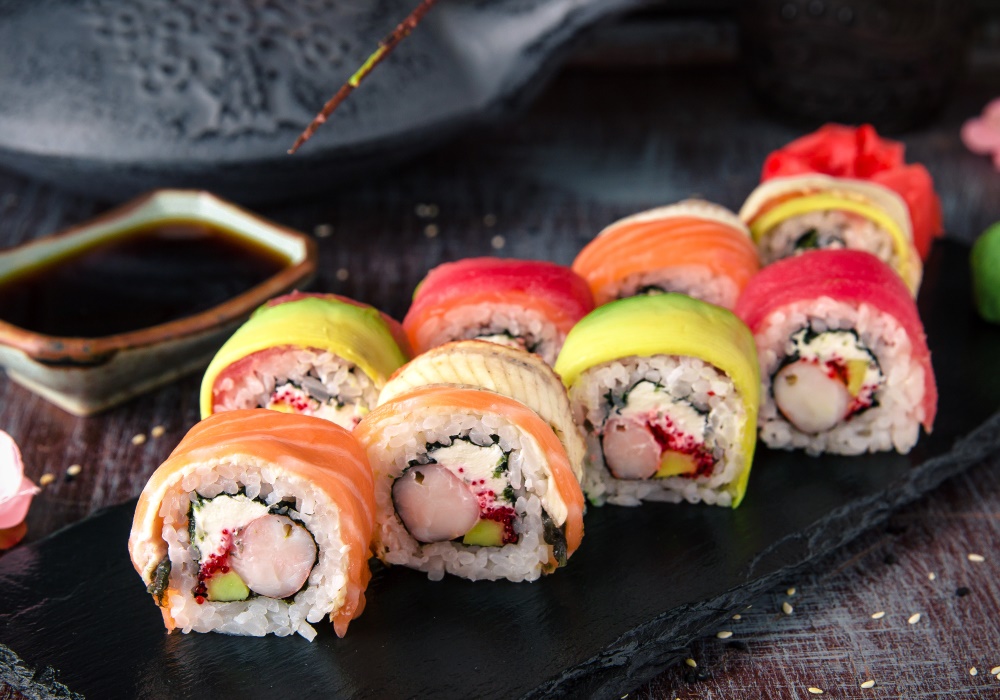
Sashimi – sushi without rice, i.e., slices of fish fancifully arranged on a plate, appropriately seasoned. They are usually served with various additions (mainly vegetables). An interesting variant of sashimi is Sashimi roll, which is additionally wrapped in rice paper.
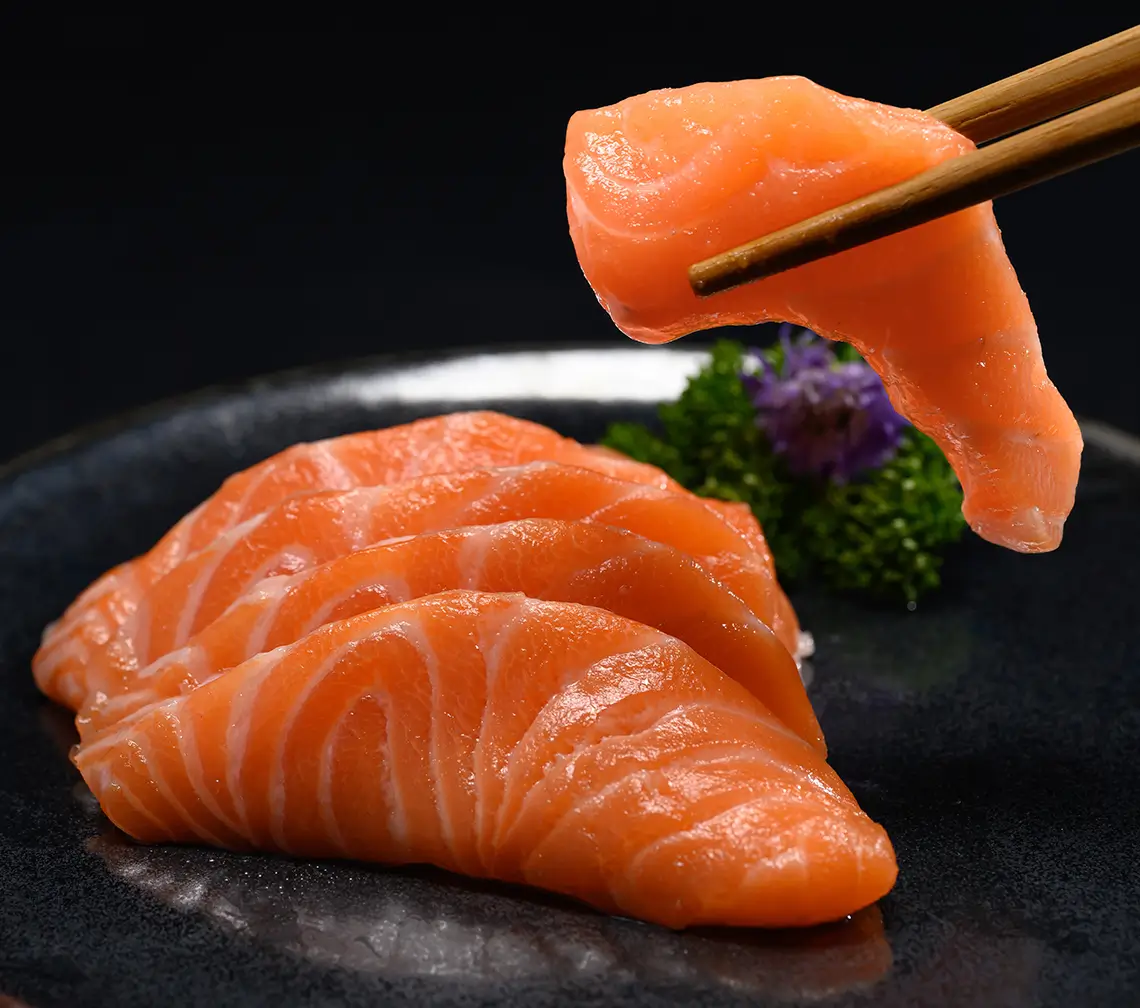
Sashimi – sushi without rice, i.e., slices of fish fancifully arranged on a plate, appropriately seasoned. They are usually served with various additions (mainly vegetables). An interesting variant of sashimi is Sashimi roll, which is additionally wrapped in rice paper.
Sushi toppings – how do soy sauce, wasabi and ginger change the taste of the dish?
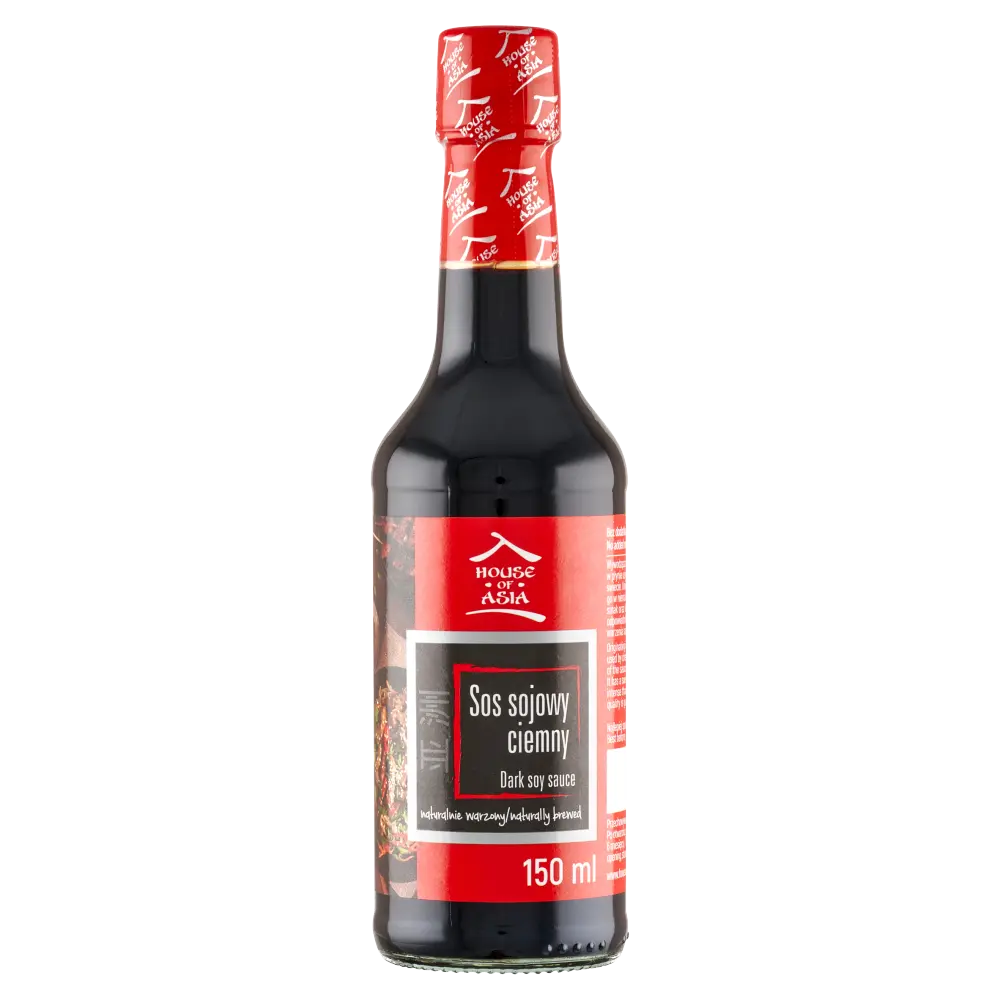
Sushi is always accompanied by soy sauce, wasabi, and pickled ginger. The former's purpose is to enhance the flavor of the meal. It's customary to pour it into a separate, shallow bowl. It's unthinkable to leave it after a meal (the Japanese don't condone food waste), so it should only be poured halfway into the bowl. Traditionally, sushi pieces are dipped in the sauce. However, they shouldn't be submerged. It's also important to use the chopsticks correctly. The fish side of the portion is dipped in the sauce, not the rice side.
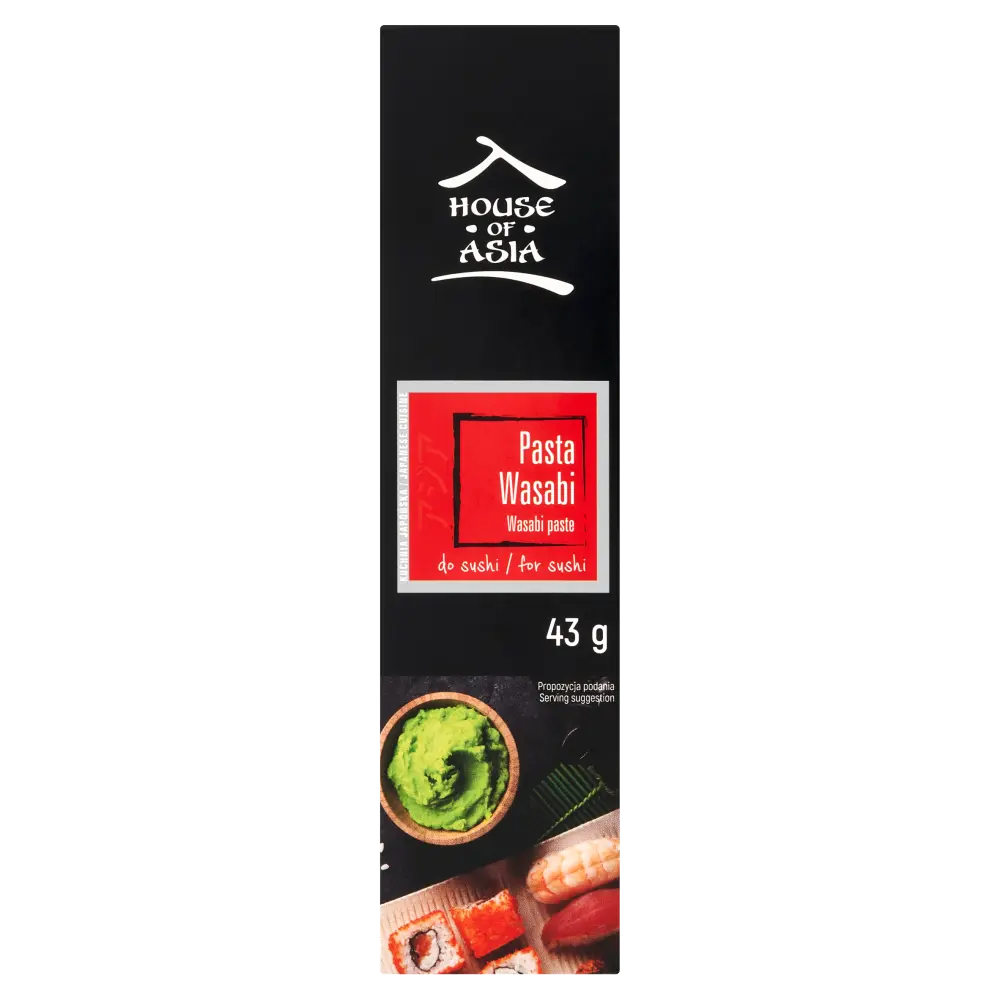
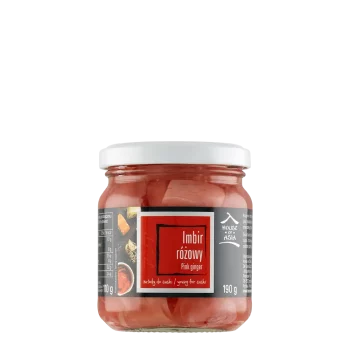
Wasabi and ginger, on the other hand, serve to cleanse the taste buds and, unlike soy sauce, neutralize the flavor of the meal. They should be eaten between pieces of sushi. It's considered a significant faux pas to combine them with sushi in the same bite.
How to start making sushi at home?
Although sushi is often associated with a dish requiring considerable skill, preparing it at home is much easier than you might think. The key is proper cooking of rice and proper preparation of ingredients. Rice is the foundation of every successful sushi and largely determines the final result.
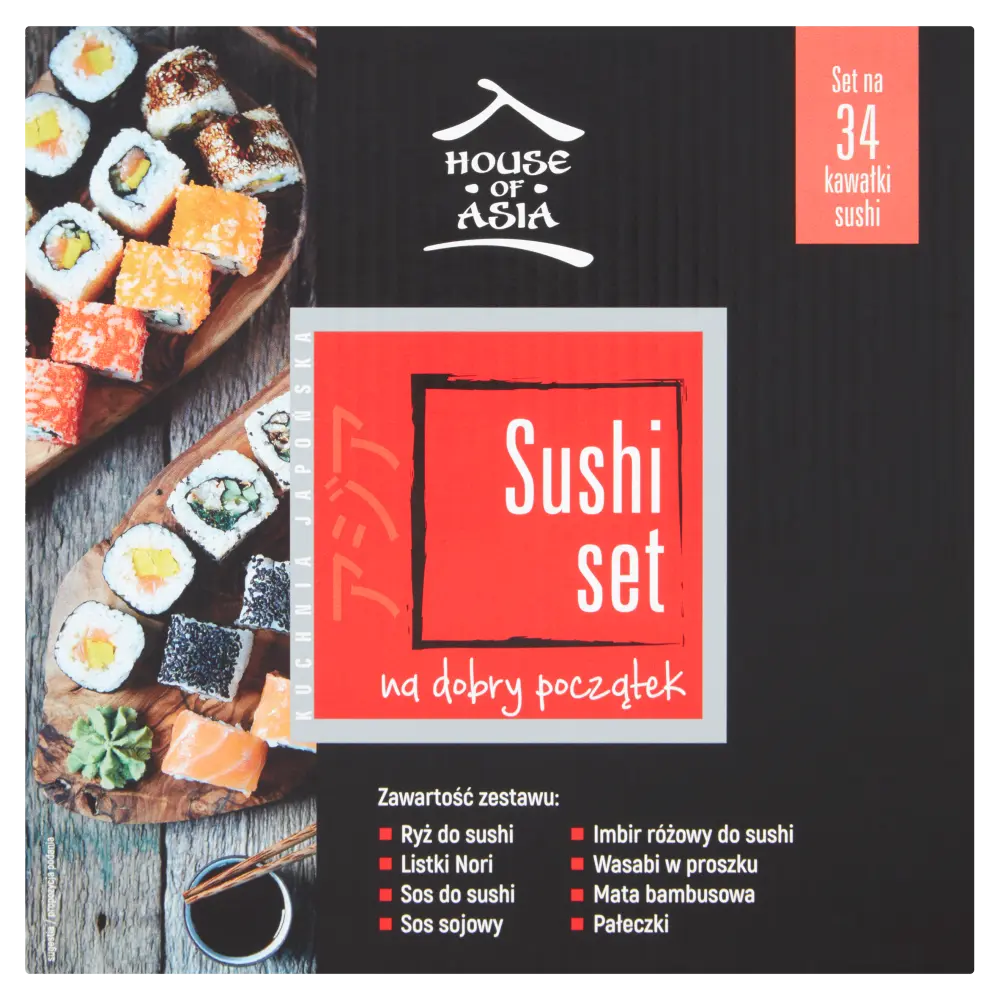
Beginners who enjoy Japanese cuisine most often start by making maki or hosomaki. It proves helpful bamboo mat for rolling sushi, which allows you to achieve an even shape of the rolls and press the ingredients properly. It's worth taking the time to learn correct wrapping technique, as it determines the aesthetics and durability of the finished rolls. Over time, you can experiment with more advanced forms, such as futomaki, uramaki, or temaki, using different combinations of fish, vegetables, and toppings.
How to eat popular types of sushi – with fingers or chopsticks?
Knowing the different types of sushi is one thing, but knowing Japanese etiquette at the table is another. Following a few basic rules will allow you to fully enjoy your meal and will be the best compliment to the sushi chef and the restaurant. If you're wondering, how to eat sushi properly, it's worth starting with the basics. While it may seem obvious, you should wash your hands thoroughly before eating. In many Japanese restaurants, guests are provided with warm, damp towels for this purpose. This basic hygiene principle also has a symbolic meaning in Japan.
Contrary to popular belief, traditional sushi can be eaten with both chopsticks and fingers. Moreover, according to Japanese tradition, eating with your fingers is completely natural and allows for a better appreciation of the rice's consistency and the freshness of the fish. Using chopsticks, or hashi, is, however, equally acceptable, provided the rules of etiquette are followed.
Chopsticks should not be inserted vertically into a bowl of rice, as this gesture evokes associations with funeral rites. Passing food from one chopstick to another is also considered tactless, as it alludes to cremation rituals in Japanese culture. Licking chopsticks, stirring food with them, pointing at others, or hesitantly "circling" the shared plate in search of the best piece is also unacceptable. If you want to transfer sushi from a shared platter to your own plate, use the end of the chopsticks opposite the one you use to put the food in your mouth.
When not eating, hashi should rest parallel to each other on a special stand or the edge of the plate. Their tips should not touch the table. In Japanese culture, attention is paid to even such small details, as they demonstrate respect for the diners and the host.
It's also worth remembering that most types of sushi should be eaten in one bite. This allows you to experience the full harmony of flavors and ingredient proportions, carefully planned by the sushi master. Splitting pieces or biting off sections can cause the roll to fall apart, and the flavors of the rice, fish, and toppings to lose their proper balance.
 Ryba
Ryba  Japanese
  up to 15 minutes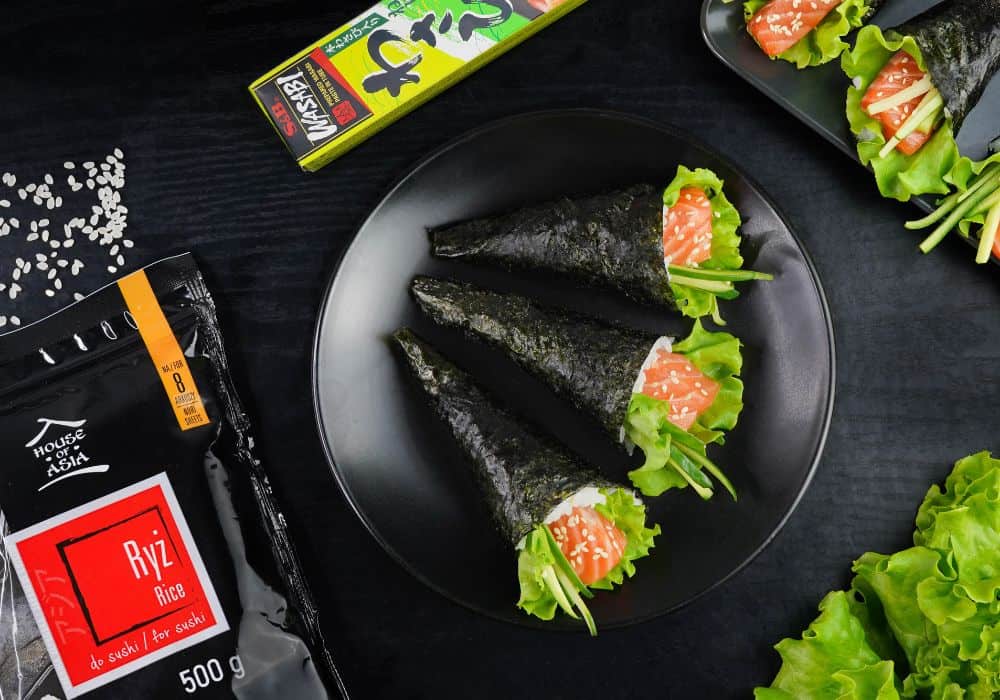
 Shrimp