HOUSE OF ASIA
See the recipeHits
Ingredients
Diets


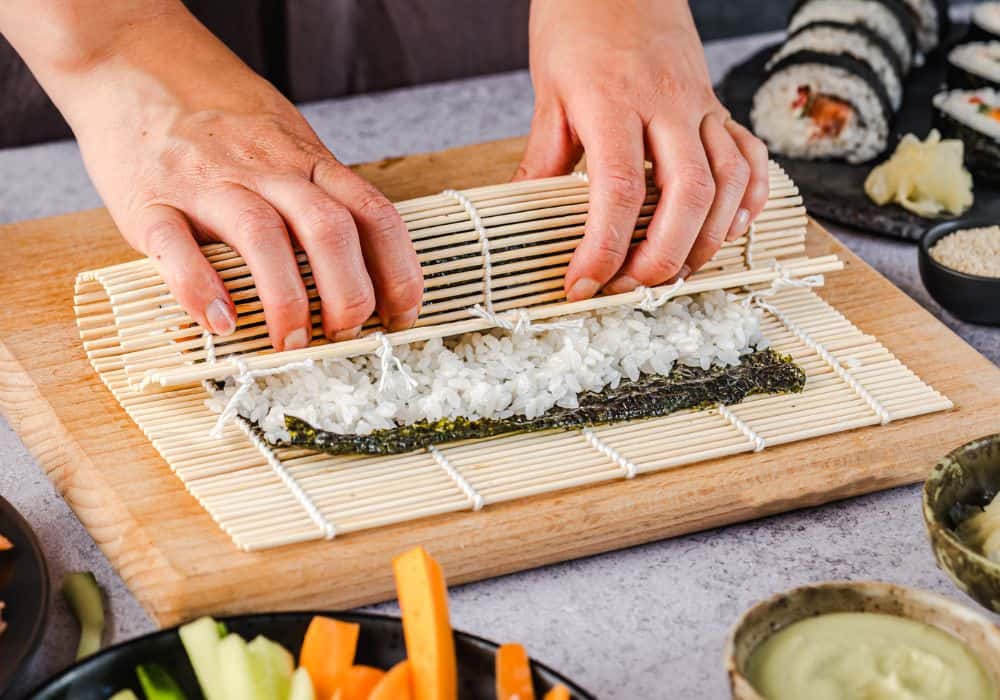


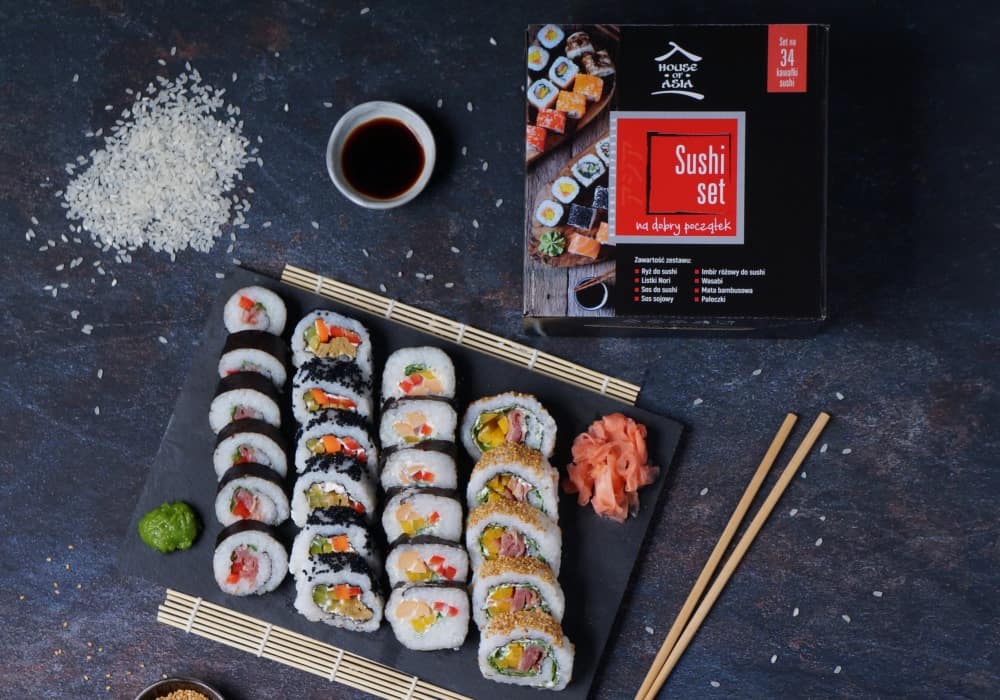
Check out how to easily roll sushi at home! We'll show you how to make the perfect sushi rolls—from choosing the right ingredients to properly rolling them. Learn the basics Japanese cuisine and surprise your loved ones with homemade sushi. Video material step by step prepared by Flymetothespoon.
1. Place a nori leaf on the mat, shiny side down, and spread a thin layer of rice on it, leaving a 1,5 cm wide empty strip at the top and bottom.
2. Place your favorite sushi ingredients on the rice.
3. Roll the roll so that the Nori sheet encloses the rice and toppings inside and the mat remains outside.
4. Cut the sushi into pieces and serve with soy sauce, ginger and wasabi.
Learn how to prepare sushi rice Click here >

Wrap the bamboo mat in plastic wrap. This will prevent it from getting dirty with rice and allow you to reuse it the next time you roll sushi.
Rolling sushi using a bamboo mat, or makisu, is one of the basic techniques for preparing sushi rolls. The mat allows you to evenly press the ingredients and shape the roll, resulting in a compact and easy-to-cut sushi. While rolling, press the mat gently but firmly, making sure the ingredients don't shift sideways. Wetting your knife before cutting the finished roll is also helpful – this will prevent the rice from sticking and will preserve the aesthetic appeal of the sushi pieces. Over time, with practice, rolling sushi will become quick and intuitive, and the rolls will become increasingly even and attractive.
The basic rule for making the perfect sushi roll is simple: first seal the filling, then gently press down. When rolling, ensure the first movement completely encloses the ingredients in a layer of rice – this is crucial to the stability of the entire roll. If too much slack is left, the sushi may fall apart during cutting. After the first rotation, stop and lightly press the roll with your hands in a "C" shape along its entire length. Try to do this evenly to avoid deforming the delicate ingredients. Then, smoothly move the bamboo mat forward, allowing the roll to roll. It's a good idea to place the finished roll, seam-side down, on a board for a few dozen seconds – the moisture from the rice will cause the seam to stick together, making the sushi easier to cut evenly.
Yes, it's definitely worth protecting your bamboo mat before first use, and the most effective way is to wrap it tightly in plastic wrap. While this isn't a technical requirement for the mat to "work," this prevents rice grains from sticking to the bamboo slats and protects the strings from absorbing moisture and ingredient residue.
When rolling sushi, press the roll gently but firmly. Too little pressure will cause the roll to fall apart, while too much pressure can distort the ingredients and push the filling out. It's best to press the mat evenly along its entire length, monitoring the roll's shape at each stage of rolling.
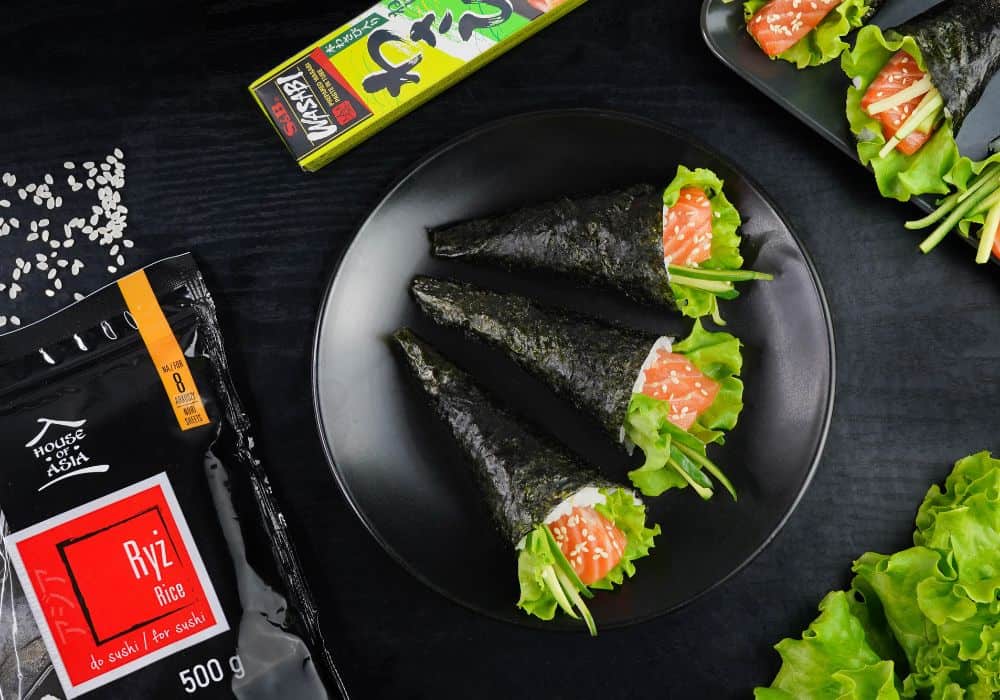
A bamboo mat, despite its versatility in rolling maki rolls, isn't a tool used for every type of sushi, as many forms of this dish rely solely on human hands. In the case of nigiri, the rice is formed by hand into oval portions to maintain their structure and fluffiness, while temaki is rolled by hand into characteristic cones, giving them their distinctive shape without the need for accessories.
Paper napkins are an indispensable aid in sushi cooking, allowing you to maintain surgical precision and cleanliness without constantly interrupting your work. They're primarily used for regularly wiping the knife, which removes sticky starch and ensures smooth cutting without crushing the roll, but they're also crucial for drying ingredients (to prevent the nori from getting soggy). Using them for a quick hand wipe prevents moisture from transferring to the dry seaweed, which is the secret to aesthetically pleasing and professional-looking sushi – just remember to choose high-quality towels that don't shed lint or leave fibers on the food.
This is possible, especially in the case of Temaki (cones), which are traditionally formed by hand. However, with classic maki, this requires greater precision and sensitivity, as it's difficult to press the roll evenly along its entire length. A bamboo mat significantly simplifies this process – it helps shape the roll and makes the sushi compact and easier to cut.
The most common cause is too little pressure during shaping, which causes the rice to not compact enough. Another problem can be a dull knife, which crushes the nori roll instead of cutting it. Always use a very sharp knife and remember to moisten the blade with water before each cut.
The simplest and most effective method is to tightly wrap the mat in several layers of plastic wrap, which will completely isolate the bamboo from the sticky rice and make cleaning easier (remember to prick the wrap with a toothpick to remove air bubbles). Additionally, always have a bowl of water and a little rice vinegar on hand to regularly moisten your hands, as sushi rice only sticks to dry surfaces. This combination will ensure smooth rolling and leave the mat dry and ready to store away.






































 Shrimp
 Japanese
 15-30 minutes
 Ryba

 Vegetables